
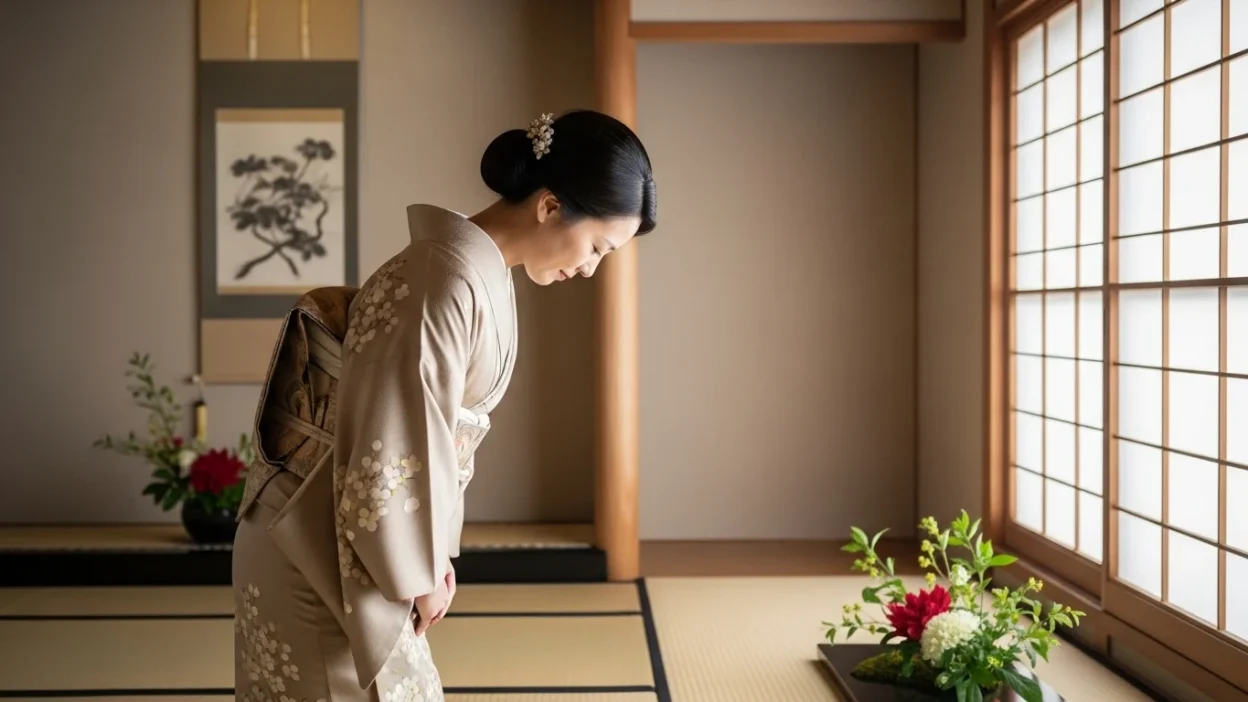
Japanese bowing etiquette plays a central role in showing respect, humility, and social awareness.
In Japan, bowing replaces many gestures like handshakes and greetings. Therefore, when you understand Japanese bowing etiquette, you communicate politeness clearly and avoid unintentional disrespect.
Many people feel confused about how deep to bow, when to bow, and how long to hold it. This complete guide explains everything in detail so you can follow proper customs with confidence.
Why Japanese Bowing Etiquette Matters
Bowing reflects respect and cultural understanding. Every situation requires the right level of formality.
Key Reasons to Follow Japanese Bowing Etiquette
- You show respect and humility
- You build trust in social interactions
- You avoid cultural misunderstandings
- You present yourself professionally
- You honor traditional customs
When you follow Japanese bowing etiquette, you demonstrate awareness and courtesy instantly.
Types of Bows in Japanese Culture
Casual Bow (Eshaku)
This bow works for everyday interactions.
Details
- Angle: about 15 degrees
- Duration: very brief
- Use: greetings, passing someone
This style fits casual situations in Japanese greeting etiquette.
Respectful Bow (Keirei)
This bow shows respect in formal settings.
Details
- Angle: about 30 degrees
- Duration: slightly longer
- Use: business meetings, formal greetings
This bow reflects proper Japanese business etiquette.
Deep Bow (Saikeirei)
This bow expresses deep respect or apology.
Details
- Angle: about 45 degrees or more
- Duration: longer hold
- Use: apologies, high respect situations
This level shows strong understanding of Japanese bowing etiquette.
How to Bow Properly
Step-by-Step Guide
- Stand straight with good posture
- Keep your hands at your sides or in front
- Bend from your waist, not your neck
- Keep your eyes lowered naturally
- Return to standing smoothly
Following these steps ensures proper Japanese bowing etiquette every time.
When to Use Bowing
Common Situations
- Greeting someone
- Saying thank you
- Apologizing
- Showing respect in business
- Entering or leaving a place
Bowing replaces many gestures in Japanese culture etiquette.
Bowing in Business Settings
Professional Expectations
In business, bowing becomes more formal and precise.
Best Practices
- Bow slightly deeper than your counterpart
- Combine bowing with a handshake if appropriate
- Maintain a calm and respectful posture
Proper bowing strengthens your image in Japanese business etiquette.
Common Mistakes to Avoid
Bowing Too Casually in Formal Situations
Using a light bow where a deep bow is required shows lack of awareness.
Making Eye Contact While Bowing
Eye contact breaks traditional form.
Rushing the Bow
Quick, careless bows feel disrespectful.
Overdoing the Bow
Excessive bowing can appear awkward or insincere.
Avoiding these mistakes improves your Japanese bowing etiquette significantly.
Dos and Don’ts of Japanese Bowing Etiquette
Dos
- Bow at the correct angle
- Match the situation’s formality
- Keep movements smooth and controlled
- Show sincerity in your gesture
- Practice proper posture
Don’ts
- Bend only your head
- Maintain strong eye contact
- Rush or exaggerate movements
- Ignore cultural context
- Use incorrect bow depth
These habits help you master Japanese bowing etiquette.
Real-Life Examples of Japanese Bowing Etiquette
Casual Greeting
You meet someone briefly.
Correct behavior:
- Use a small, quick bow
Wrong behavior:
- Use a deep formal bow unnecessarily
Business Meeting
You greet a senior professional.
Correct behavior:
- Use a respectful 30-degree bow
Wrong behavior:
- Use a casual nod
Apology Situation
You need to apologize sincerely.
Correct behavior:
- Use a deep, longer bow
Wrong behavior:
- Use a quick or shallow bow
These examples make Japanese bowing etiquette easier to understand and apply.
Cultural Insights Behind Bowing
Respect and Hierarchy
Japanese culture values respect and social hierarchy. Bowing reflects these values clearly.
Non-Verbal Communication
Bowing communicates feelings without words. It shows gratitude, apology, and acknowledgment.
Precision and Simplicity
Each movement matters. Clean, simple gestures define proper Japanese bowing etiquette.
Advanced Tips for Mastering Bowing
Observe Others Carefully
Watch how locals bow in different situations.
Adjust Based on Context
Match the depth and timing to the situation.
Stay Natural
Avoid overthinking; focus on sincerity.
These tips help you refine your Japanese bowing etiquette.
FAQs
What is Japanese bowing etiquette?
Japanese bowing etiquette refers to the proper way of bowing to show respect in different social situations.
How deep should I bow in Japan?
Depth depends on the situation, ranging from 15 degrees for casual to 45 degrees for formal.
Do I need to bow as a tourist?
Yes, even a simple bow shows respect and cultural awareness.
Can I combine bowing with a handshake?
Yes, especially in international business settings.
Should I make eye contact while bowing?
No, you should lower your eyes during the bow.
How long should I hold a bow?
Hold briefly for casual bows and slightly longer for formal ones.
What is the biggest mistake in bowing?
Using the wrong depth or rushing the gesture.
Final Thoughts on Japanese Bowing Etiquette
Japanese bowing etiquette reflects respect, humility, and cultural awareness.
When you understand the different types of bows and apply them correctly, you communicate politeness without words. Small details, such as posture and timing, make a strong impression.
By practicing proper Japanese bowing etiquette, you show respect for tradition and build positive connections. Consistent practice helps you perform each bow naturally and confidently in any situation.

Theo Blackmere is an American writer focused on etiquette and professional communication. He contributes insightful, well structured content to Etiquify. His writing emphasizes respect, clarity, and modern social awareness across personal and professional interactions.