
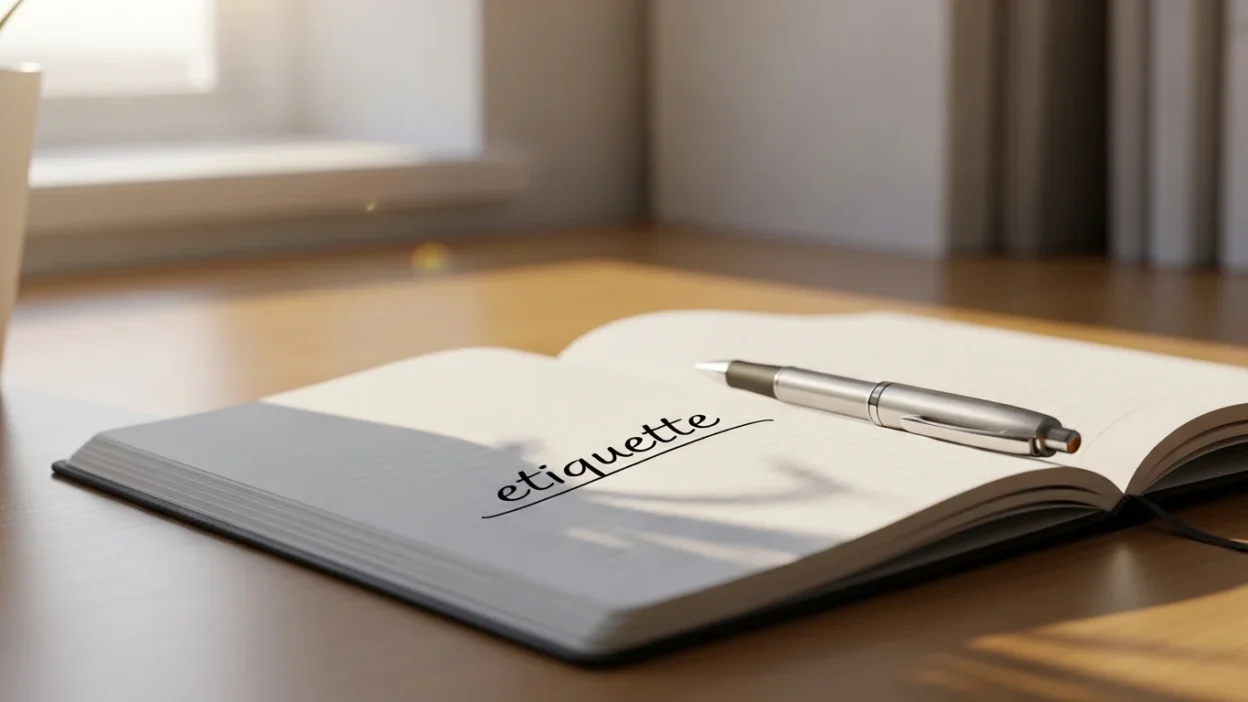
Spelling certain words can feel tricky, especially when they come from other languages. Therefore, learning how to spell etiquette correctly helps you write confidently and avoid common mistakes.
Moreover, the word appears often in writing about manners, behavior, and social rules. When you understand how to spell etiquette, you improve both your vocabulary and professionalism.
Additionally, many people misspell this word because of its unusual structure. As a result, mastering how to spell etiquette ensures accuracy in emails, articles, and daily communication.
What Is the Correct Spelling
The correct spelling is:
👉 etiquette
This word comes from French, which explains its unique structure. Therefore, understanding its origin helps you remember how to spell etiquette more easily.
Break Down the Word Step by Step
Learning in parts makes spelling easier. Therefore, breaking the word helps you remember how to spell etiquette quickly.
Simple Breakdown
- e + ti + quette
- Notice the “qu” combination
- Ends with “ette”
This structure helps you master how to spell etiquette without confusion.
Why People Misspell Etiquette
Many learners struggle with this word. Therefore, understanding mistakes improves your spelling.
Common Reasons
- Silent letters
- French origin
- Double “t” and “e” at the end
- Confusion with phonetic spelling
Because of these factors, people often forget how to spell etiquette correctly.
Common Misspellings to Avoid
Avoid these incorrect versions:
- ❌ etiket
- ❌ etiquet
- ❌ ettiquette
- ❌ etiqutte
Recognizing mistakes helps you improve how to spell etiquette faster.
Easy Tricks to Remember the Spelling
Simple memory tricks make learning easier. Therefore, use these tips to remember how to spell etiquette.
Helpful Tips
- Think: “eti + quette”
- Remember: “quiet + ette” sound
- Write it a few times daily
- Practice using it in sentences
These tricks strengthen your ability to recall how to spell etiquette instantly.
Use Etiquette in Sentences
Practice improves memory. Therefore, using the word helps reinforce how to spell etiquette.
Examples
- Good etiquette shows respect for others.
- Workplace etiquette improves communication.
- Learning dining etiquette is important.
Using the word correctly builds confidence in how to spell etiquette.
Why Correct Spelling Matters
Spelling reflects your attention to detail. Therefore, accuracy plays an important role.
Good spelling helps you:
- Look more professional
- Communicate clearly
- Avoid misunderstandings
- Build credibility
Because of this, mastering how to spell etiquette becomes valuable in both personal and professional writing.
Quick Spelling Checklist
| Step | Action |
|---|---|
| Start | Write “eti” |
| Middle | Add “qu” |
| End | Finish with “ette” |
| Practice | Use in sentences |
This checklist makes learning how to spell etiquette simple and effective.
Final Thoughts
Spelling may seem small, yet it makes a big difference in communication. Therefore, learning how to spell etiquette correctly helps you write with confidence and clarity.
Moreover, by breaking the word into parts and practicing regularly, you can avoid common mistakes. Ultimately, once you master how to spell etiquette, you improve your overall writing and communication skills.
FAQs
How do you spell etiquette correctly
The correct spelling is etiquette.
Why is etiquette hard to spell
It comes from French and includes silent letters and unusual patterns.
What is the meaning of etiquette
Etiquette refers to proper manners and polite behavior in social situations.
How can I remember the spelling of etiquette
Break it into parts like “eti + quette” and practice writing it.
What are common misspellings of etiquette
Common mistakes include etiket, etiquet, and ettiquette.
Is etiquette an English word
It is used in English but comes from the French language.

Theo Blackmere is an American writer focused on etiquette and professional communication. He contributes insightful, well structured content to Etiquify. His writing emphasizes respect, clarity, and modern social awareness across personal and professional interactions.