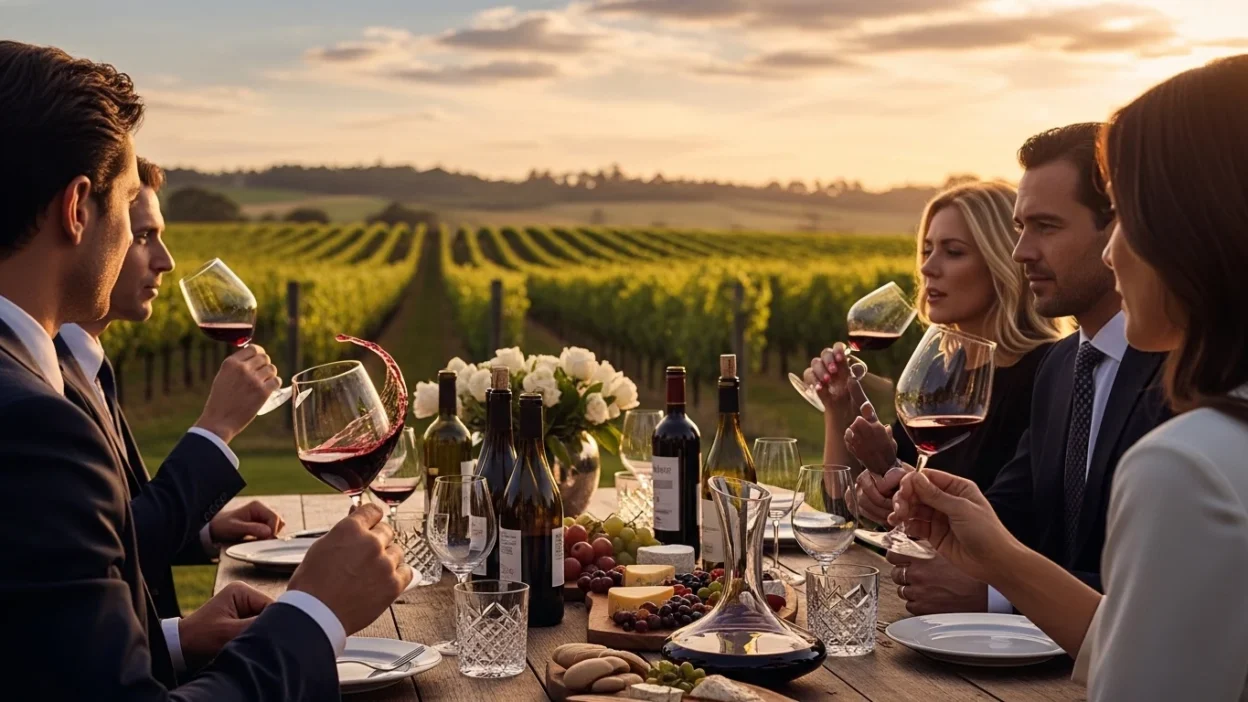
Wine tasting offers more than simply drinking wine. Instead, it creates an experience that celebrates aroma, flavor, craftsmanship, and culture. Therefore, understanding proper wine tasting etiquette helps guests enjoy tastings respectfully while also appreciating the effort behind every bottle.
Whether someone visits a vineyard, attends a tasting event, or joins a winery tour, polite behavior makes the experience smoother for everyone involved. Moreover, good wine tasting etiquette helps people interact comfortably with hosts, sommeliers, and other guests. As a result, tastings feel more enjoyable, relaxed, and educational.
In addition, wine tasting involves subtle traditions that many beginners do not immediately know. For example, proper glass handling, tasting order, and respectful conversation all play important roles. Because of this, learning wine tasting etiquette helps guests avoid awkward mistakes while showing appreciation for the wine.
This guide explains the essential rules, practical tips, and common mistakes so you can confidently follow proper wine tasting etiquette at wineries, tasting rooms, and wine events.
Why Wine Tasting Etiquette Matters
Wine tasting often occurs in social environments where guests share space, conversation, and experiences. Therefore, respectful behavior improves the event for everyone.
Practicing good wine tasting etiquette helps people:
- Show respect to winemakers and hosts
- Maintain a pleasant atmosphere
- Learn more about wine culture
- Interact politely with other guests
- Create a refined and enjoyable tasting experience
Because wine tasting focuses on appreciation rather than consumption, etiquette plays a key role.
Basic Wine Tasting Etiquette Rules
Arrive On Time and Prepared
Punctuality shows respect for the host and the tasting schedule. Therefore, guests should arrive on time or slightly early.
Good wine tasting etiquette also includes:
- Dressing appropriately for the venue
- Avoiding strong perfumes or colognes
- Arriving with a neutral palate
Strong scents can interfere with wine aromas, so fragrance should remain minimal.
Hold the Wine Glass Properly
Proper glass handling helps preserve the wine’s temperature and aroma.
Correct wine tasting etiquette suggests:
- Holding the glass by the stem
- Avoiding touching the bowl of the glass
- Keeping fingerprints off the glass surface
Holding the stem keeps the wine cooler and allows clearer observation of the wine’s color.
Take Small Sips
Wine tastings focus on evaluating flavor rather than drinking large amounts. Therefore, guests should take small, thoughtful sips.
Good wine tasting etiquette encourages:
- Small controlled sips
- Slow tasting
- Paying attention to aroma and flavor
This approach allows guests to fully appreciate the wine’s characteristics.
The Proper Wine Tasting Process
Wine professionals often follow a simple method when tasting wine. Understanding this process supports proper wine tasting etiquette.
Step 1 Observe the Wine
First, look at the wine’s color and clarity.
Tilt the glass slightly and notice:
- Color intensity
- Transparency
- Light reflection
Observation helps identify the wine style.
Step 2 Swirl the Glass
Next, gently swirl the wine in the glass.
Swirling releases aromas and enhances the tasting experience. However, proper wine tasting etiquette requires gentle movements to avoid spills.
Step 3 Smell the Aroma
After swirling, bring the glass toward your nose.
Take a slow breath and notice the aromas. Wine may include scents such as:
- Fruit
- Herbs
- Oak
- Flowers
Aroma plays a major role in wine tasting.
Step 4 Taste the Wine
Finally, take a small sip and let the wine move across your palate.
Focus on:
- Sweetness
- Acidity
- Body
- Finish
This method helps guests appreciate the complexity of each wine.
Wine Tasting Etiquette Dos and Don’ts
Dos
- Listen carefully to the host or sommelier
- Ask thoughtful questions about the wine
- Sip slowly and thoughtfully
- Show appreciation for the experience
- Respect other guests’ space
Don’ts
- Do not drink wine too quickly
- Avoid loud conversations
- Do not dominate the tasting discussion
- Avoid criticizing wines harshly
- Do not overfill tasting glasses
These habits support polite wine tasting etiquette.
Spitting Wine During Tastings
Many professional tastings include spitting rather than swallowing wine. Although this may seem unusual, it actually reflects standard wine tasting etiquette.
Spitting allows tasters to:
- Evaluate many wines without overconsumption
- Maintain clear judgment
- Stay comfortable during long tastings
Wineries usually provide spit buckets or containers for this purpose.
Wine Tasting Etiquette at Wineries
Vineyard visits offer unique tasting experiences. Therefore, guests should follow additional etiquette guidelines.
Proper winery wine tasting etiquette includes:
- Respecting the property and vineyards
- Following tasting room instructions
- Avoiding touching equipment or barrels
- Showing gratitude to hosts
Polite behavior helps maintain the welcoming atmosphere of the winery.
Conversation During Wine Tastings
Wine tastings often encourage conversation and learning. However, guests should keep discussions respectful.
Good wine tasting etiquette recommends:
- Listening carefully to the presenter
- Asking thoughtful questions
- Avoiding arguments about wine opinions
Because taste preferences vary widely, respectful discussion keeps the experience enjoyable.
Quick Wine Tasting Etiquette Guide
| Situation | Proper Behavior | What to Avoid |
|---|---|---|
| Holding glass | Hold by the stem | Holding the bowl |
| Tasting wine | Take small sips | Drinking quickly |
| Aroma evaluation | Swirl gently | Spilling wine |
| Conversation | Speak politely | Loud talking |
| Multiple wines | Sip slowly | Rushing tastings |
Common Wine Tasting Etiquette Mistakes
Many beginners unknowingly make small mistakes during tastings.
Common mistakes include:
- Wearing strong perfume
- Drinking wine too quickly
- Interrupting the host
- Filling glasses too much
- Ignoring the tasting order
Avoiding these behaviors improves overall wine tasting etiquette.
Example of Proper Wine Tasting Behavior
Imagine attending a winery tasting event.
A respectful sequence might look like this:
- Arrive on time and greet the host politely.
- Hold the glass by the stem.
- Observe the wine color.
- Swirl gently and smell the aroma.
- Take a small sip and evaluate the flavor.
These simple steps demonstrate excellent wine tasting etiquette.
Conclusion
Wine tasting offers a refined and enjoyable way to explore different wines and learn about winemaking traditions. Therefore, understanding proper wine tasting etiquette helps guests participate respectfully while fully appreciating the experience.
Simple habits such as holding the glass correctly, tasting slowly, respecting hosts, and maintaining polite conversation create a welcoming atmosphere for everyone. Moreover, practicing thoughtful wine tasting etiquette allows people to enjoy wine culture with confidence and respect.
When guests follow these etiquette principles, wine tastings become memorable experiences filled with learning, appreciation, and enjoyment.
Search Intent: Informational / How-To
Frequently Asked Questions
What is wine tasting etiquette?
Wine tasting etiquette refers to the polite behaviors people follow when sampling wine at wineries, tasting rooms, or events.
Should you swirl wine during tasting?
Yes. Gentle swirling releases aromas and enhances the tasting experience.
Why do people spit wine during tastings?
Spitting helps tasters evaluate many wines without drinking too much alcohol.
How should you hold a wine glass?
Guests should hold the glass by the stem to maintain wine temperature and avoid fingerprints.
Is it rude to dislike a wine at a tasting?
No. However, polite language and respectful comments show proper wine tasting etiquette.
Can you wear perfume to a wine tasting?
Guests should avoid strong fragrances because scents can interfere with wine aromas.
Evan Whitmore is an American writer focused on modern etiquette and communication. He contributes practical, reader friendly content to Etiquify. His work emphasizes respect, clarity, and confidence in everyday personal and professional interactions.