
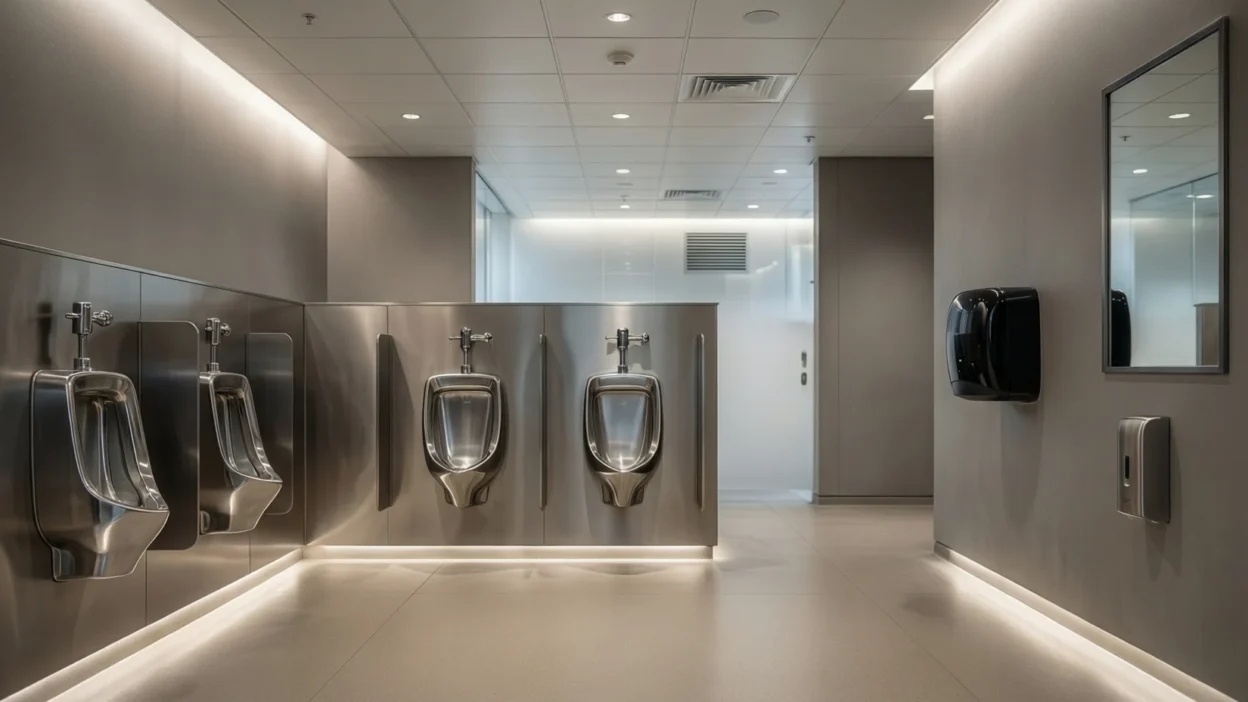
Urinal etiquette plays a quiet yet important role in shared public spaces. Although restrooms feel routine, behavior inside them affects comfort, privacy, and hygiene.
Therefore, understanding urinal etiquette helps maintain respect and prevents awkward or uncomfortable situations.
Moreover, public restrooms rely on unspoken social rules. As a result, awareness and consideration matter more than conversation.
When urinal etiquette is practiced consistently, restrooms feel orderly, respectful, and stress free.
This guide explains urinal etiquette clearly using practical advice, real examples, and easy rules.
What Is Urinal Etiquette?
Urinal etiquette refers to the accepted behaviors that promote privacy, hygiene, and respect when using urinals.
While rules are rarely posted, expectations remain widely understood. Consequently, etiquette helps people share space comfortably.
Why Urinal Etiquette Matters
Urinal etiquette protects personal comfort.
Urinal etiquette matters because:
- Privacy is limited
- Spaces are shared
- Hygiene affects everyone
- Awkwardness spreads quickly
Therefore, respectful behavior benefits all users.
Choosing The Right Urinal
Spacing And Awareness
Spacing is essential.
- Leave one urinal empty when possible
- Avoid standing directly beside someone
- Use stalls if space feels limited
Proper spacing respects personal boundaries.
Body Position And Posture Etiquette
Facing Forward Respectfully
Posture communicates awareness.
- Face forward at all times
- Avoid unnecessary movement
- Stand comfortably within your space
Proper posture reduces discomfort.
Eye Contact And Conversation Etiquette
Maintaining Privacy
Silence is expected.
- Avoid eye contact
- Do not initiate conversations
- Focus on the task
Privacy keeps situations comfortable.
Phone Usage Etiquette
Keeping Devices Away
Phones compromise hygiene and privacy.
- Avoid phone use
- Keep devices in pockets
- Focus on cleanliness
Limiting phone use shows respect.
Hygiene And Cleanliness Etiquette
Leaving The Area Clean
Clean habits matter.
- Aim carefully
- Flush properly
- Wash hands thoroughly
Cleanliness protects public health.
Urinal Etiquette In Crowded Restrooms
Adjusting When Space Is Limited
Crowds require flexibility.
- Use stalls if available
- Maintain awareness
- Be patient
Adaptability reduces tension.
Urinal Etiquette For Shared And Workplace Restrooms
Professional Environment Awareness
Workplace restrooms require discretion.
- Remain quiet
- Avoid lingering
- Respect colleagues’ privacy
Professionalism extends everywhere.
Common Urinal Etiquette Mistakes
Mistakes happen unintentionally.
Frequent Errors
- Standing too close
- Using phones
- Talking unnecessarily
- Leaving messes
Avoiding these mistakes improves comfort.
Cultural Differences In Urinal Etiquette
Understanding Global Norms
Etiquette varies worldwide.
- Privacy expectations differ
- Restroom layouts vary
- Social norms change
Therefore, observing others helps guide behavior.
Urinal Etiquette Dos And Don’ts
✅ Dos
- Do respect personal space
- Do remain silent
- Do clean up after yourself
- Do wash hands
❌ Don’ts
- Don’t stare or glance
- Don’t start conversations
- Don’t use your phone
- Don’t rush others
Frequently Asked Questions
What is proper urinal etiquette?
It means respecting privacy, space, and hygiene.
Is talking at urinals acceptable?
No, silence is preferred.
Should phones be used at urinals?
No, phones should stay away.
What if all urinals are occupied?
Wait or use a stall if available.
Does urinal etiquette differ by culture?
Yes, norms vary by region.
Final Thoughts
Urinal etiquette may seem minor, yet it strongly influences comfort, hygiene, and respect in shared restrooms.
While rules remain unspoken, awareness makes them easy to follow. Therefore, maintaining personal space, staying quiet, and practicing cleanliness ensures a smooth experience for everyone.
When urinal etiquette becomes a habit, public restrooms feel more respectful, organized, and comfortable for all users.

Evan Whitmore is an American writer focused on modern etiquette and communication. He contributes practical, reader friendly content to Etiquify. His work emphasizes respect, clarity, and confidence in everyday personal and professional interactions.