
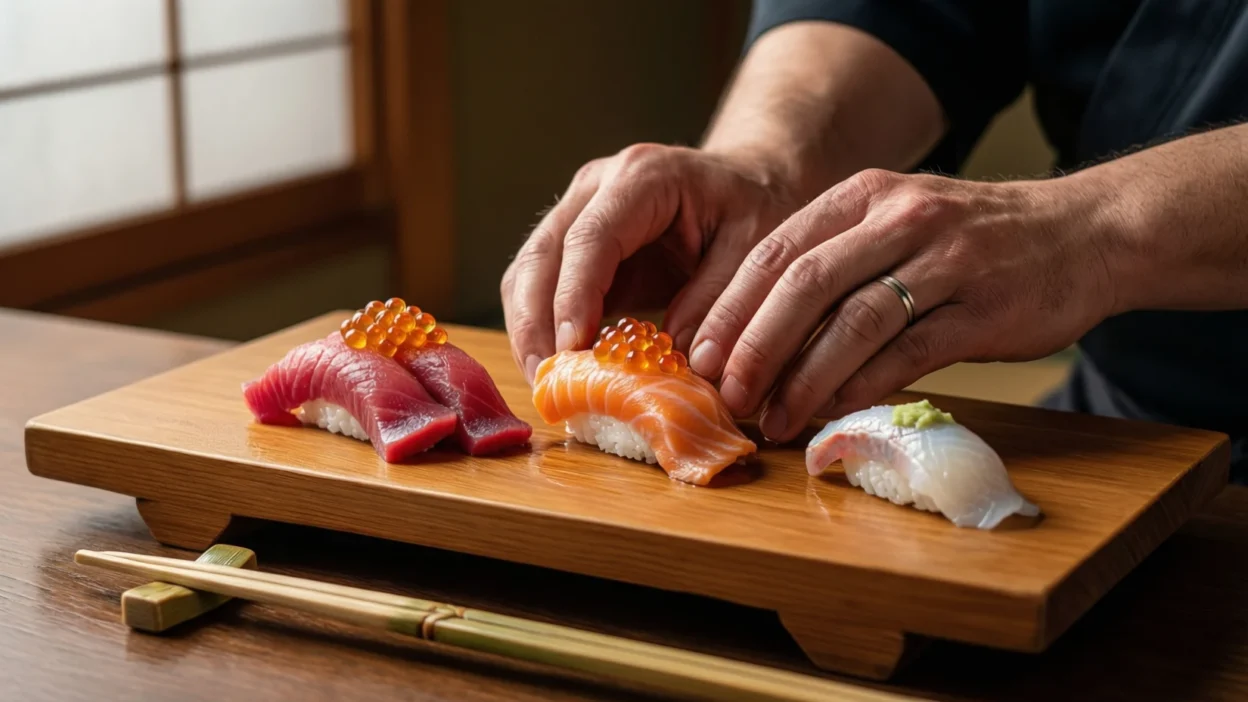
Sushi etiquette reflects respect for Japanese culture, skilled chefs, and shared dining spaces.
Although sushi feels casual today, traditional customs still matter. Therefore, understanding sushi etiquette helps diners enjoy meals confidently while avoiding unintentional mistakes.
Moreover, sushi etiquette is not about strict rules. Instead, it focuses on appreciation, mindfulness, and simplicity.
When followed thoughtfully, sushi etiquette enhances both the dining experience and cultural understanding.
What Is Sushi Etiquette?
Sushi etiquette refers to traditional and modern dining practices used when eating sushi. While customs vary, respect remains central.
Why Sushi Etiquette Matters
Sushi etiquette honors craftsmanship.
Sushi etiquette matters because:
- Sushi chefs train for years
- Ingredients are carefully selected
- Presentation carries meaning
- Dining is a shared experience
Therefore, etiquette shows gratitude.
Chopsticks And Hand Usage
Using Hands Or Chopsticks Correctly
Traditionally, sushi may be eaten with hands.
- Nigiri can be eaten by hand
- Chopsticks are also acceptable
- Avoid rubbing chopsticks together
- Place chopsticks neatly when finished
Both methods are respectful.
How To Eat Sushi Properly
Eating Sushi In One Bite
Sushi is designed for balance.
- Eat nigiri in one bite
- Avoid biting in half
- Turn fish-side down into soy sauce
This preserves flavor harmony.
Soy Sauce Etiquette
Using Soy Sauce Sparingly
Soy sauce enhances flavor, not masks it.
- Dip fish, not rice
- Use minimal soy sauce
- Never soak sushi
Subtlety is key.
Wasabi And Ginger Etiquette
Understanding Their Purpose
Wasabi and ginger have specific roles.
- Wasabi is added by the chef
- Avoid mixing wasabi into soy sauce
- Eat ginger between bites, not on sushi
Each item cleanses the palate.
Sushi Order Etiquette
Eating From Light To Rich
Order affects taste experience.
- Start with white fish
- Move to richer flavors
- Finish with rolls or eel
Progression enhances enjoyment.
Sushi Bar Etiquette
Respecting The Sushi Chef
Sushi chefs value courtesy.
- Greet the chef politely
- Avoid strong perfume
- Ask questions respectfully
- Thank the chef afterward
Mutual respect matters.
Eating Sushi In Restaurants Vs Home
Adjusting Etiquette By Setting
Etiquette varies slightly by location.
- Follow house rules
- Observe other diners
- Adapt respectfully
Flexibility shows awareness.
Common Sushi Etiquette Mistakes
Mistakes To Avoid
Many errors happen unintentionally.
- Mixing wasabi into soy sauce
- Overusing soy sauce
- Playing with food
- Speaking loudly at the bar
Awareness prevents embarrassment.
Sushi Etiquette Dos And Don’ts
✅ Dos
- Do appreciate simplicity
- Do eat thoughtfully
- Do respect tradition
- Do thank the chef
❌ Don’ts
- Don’t waste food
- Don’t rush courses
- Don’t criticize loudly
- Don’t ignore customs
Cultural Respect In Sushi Etiquette
Honoring Japanese Traditions
Sushi carries cultural significance.
- Respect minimalism
- Value precision
- Appreciate craftsmanship
Cultural awareness deepens respect.
Frequently Asked Questions
Is it rude to eat sushi with hands?
No, it is traditionally acceptable.
Can sushi be dipped rice-first?
No, dip the fish side only.
Is mixing wasabi and soy sauce wrong?
Yes, it is discouraged traditionally.
Should ginger be eaten with sushi?
No, eat it between pieces.
Is tipping sushi chefs required?
It depends on local customs.
Can sushi be customized?
Yes, but ask politely.
Final Thoughts
Sushi etiquette combines respect, simplicity, and appreciation for skilled craftsmanship.
Although modern dining allows flexibility, traditional customs still guide proper behavior. Therefore, mindful eating, polite interaction, and cultural awareness elevate the experience.
When sushi etiquette is practiced naturally, every meal becomes more meaningful, enjoyable, and respectful for both diners and chefs alike.

Evan Whitmore is an American writer focused on modern etiquette and communication. He contributes practical, reader friendly content to Etiquify. His work emphasizes respect, clarity, and confidence in everyday personal and professional interactions.