
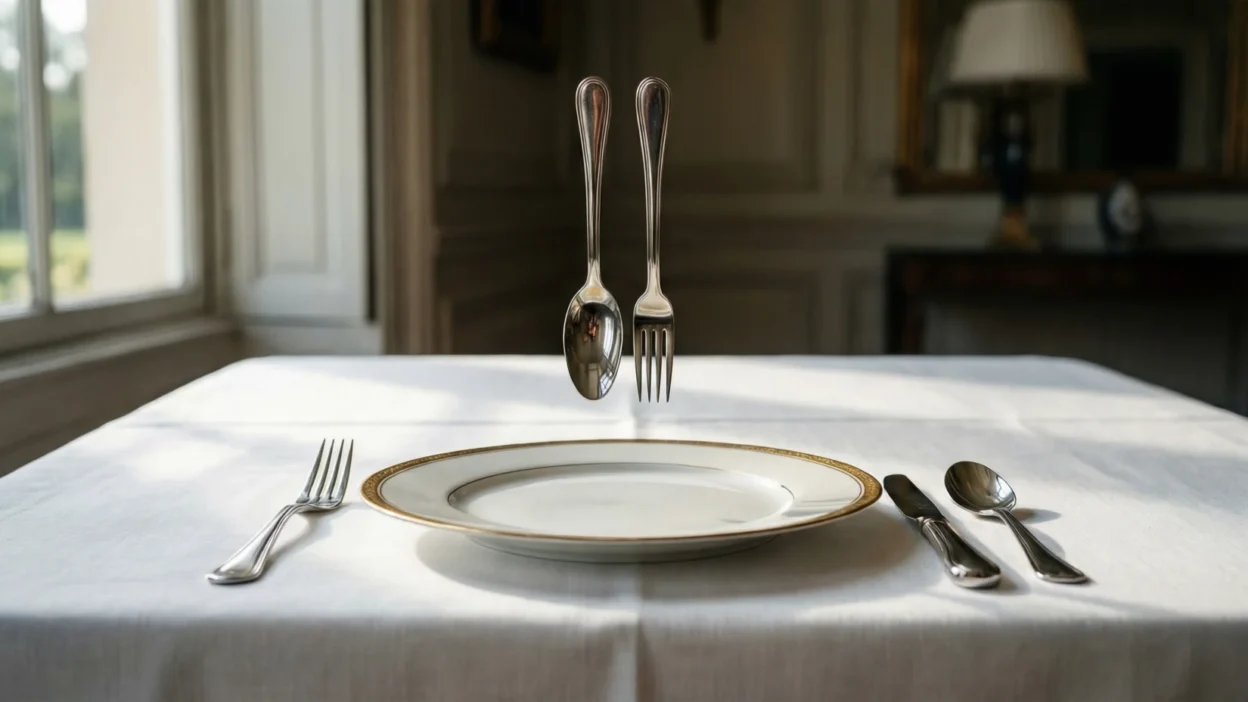
Silverware etiquette refers to the accepted rules for placing, using, and handling forks, knives, and spoons during a meal.
These rules exist to make dining orderly, comfortable, and respectful for everyone at the table.
Although silverware etiquette may appear complex at first, it follows logical patterns.
Once understood, these guidelines help diners focus on conversation and enjoyment rather than confusion.
As a result, proper silverware use enhances both confidence and courtesy at the table.
What Silverware Etiquette Means
Purposeful Placement
Each utensil has a specific role and position on the table.
Orderly Dining
Silverware etiquette guides diners through multiple courses smoothly.
Respect for Others
Correct use prevents distraction and discomfort at shared tables.
Why Silverware Etiquette Matters
Creates Confidence
Knowing which utensil to use eliminates uncertainty.
Supports Formal Dining
Structured settings rely on clear utensil rules.
Reflects Good Manners
Proper silverware use signals awareness and respect.
Basic Silverware Placement Rules
Fork Placement
Forks are placed to the left of the plate.
Knife Placement
Knives sit to the right with blades facing inward.
Spoon Placement
Spoons are placed to the right of the knife.
Dessert Utensils
Dessert forks or spoons are positioned above the plate.
How to Use Silverware During a Meal
Start from the Outside
Use the outermost utensils first and work inward.
One Utensil at a Time
Only use one set of silverware per course.
Proper Grip
Hold utensils gently without clenching or pointing.
Resting and Finished Positions
Resting Position
Place utensils diagonally on the plate when pausing.
Finished Position
Lay utensils parallel across the plate to signal completion.
Avoid Table Placement
Used utensils should never touch the table again.
American vs European Silverware Etiquette
American Style
Fork switches between hands during cutting and eating.
European Style
Fork remains in the left hand throughout the meal.
Choosing a Style
Either method is acceptable if used consistently.
Silverware Etiquette for Formal Dining
Multiple Forks and Knives
Formal settings include separate utensils for each course.
Charger Plates
Chargers remain until the main course arrives.
Bread and Butter Use
Bread plates sit above forks with a butter knife.
Silverware Etiquette for Informal Meals
Simplified Settings
Casual meals use fewer utensils.
Flexible Use
Formal rules may relax slightly in informal settings.
Still Polite
Basic manners should always be maintained.
Common Silverware Etiquette Mistakes
Using the Wrong Utensil
This often happens when diners rush.
Gesturing with Utensils
Pointing or waving utensils appears rude.
Chewing with Utensils in Hand
Utensils should rest on the plate while chewing.
Silverware Etiquette Dos and Don’ts
| Do | Don’t |
|---|---|
| Start from the outside | Grab random utensils |
| Rest utensils on the plate | Place used silverware on the table |
| Use utensils quietly | Clank utensils loudly |
| Follow the meal pace | Rush through courses |
| Keep utensils neat | Gesture while holding them |
Cultural Differences in Silverware Etiquette
Western Dining
Forks, knives, and spoons follow formal placement rules.
Asian Dining
Chopsticks replace traditional silverware.
Cultural Awareness
Observing others helps guide proper behavior.
Frequently Asked Questions About Silverware Etiquette
What is silverware etiquette?
Silverware etiquette refers to proper placement and use of eating utensils during meals.
Which utensil should I use first?
Always start with the outermost utensil and work inward.
What does resting silverware mean?
It signals that you are pausing but not finished eating.
Is switching hands considered rude?
No. Both American and European styles are acceptable.
Should silverware ever touch the table again?
No. Once used, utensils should remain on the plate.
Conclusion
Silverware etiquette may seem formal, yet it serves a simple purpose: creating smooth, respectful dining experiences.
By understanding utensil placement, proper use, and dining signals, individuals can approach any meal with confidence.
Moreover, practicing correct silverware etiquette demonstrates awareness, patience, and respect for others at the table.
Whether dining casually or attending a formal event, these skills help meals feel comfortable, polished, and enjoyable for everyone involved.

Evan Whitmore is an American writer focused on modern etiquette and communication. He contributes practical, reader friendly content to Etiquify. His work emphasizes respect, clarity, and confidence in everyday personal and professional interactions.