
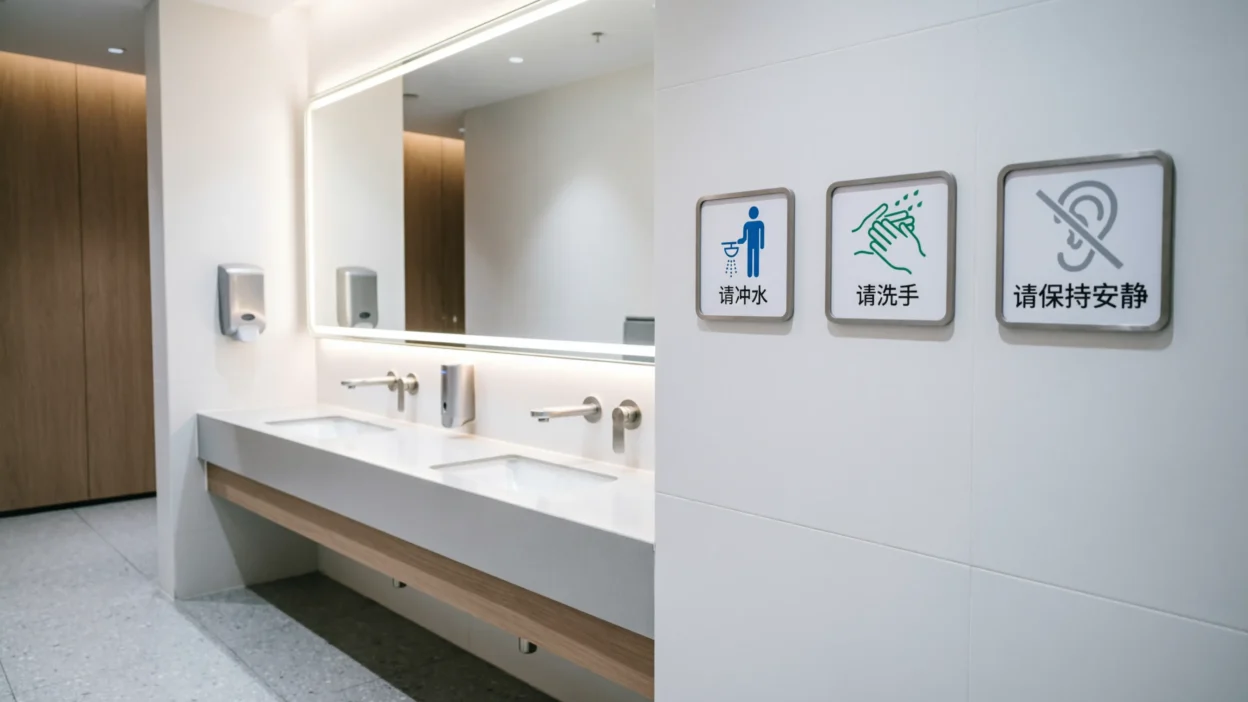
Bathroom signs may look simple, yet they play a powerful role in maintaining cleanliness, comfort, and respect in shared spaces.
Signs for bathroom etiquette communicate expectations clearly without confrontation. Because restrooms are used by many people daily, visual reminders help prevent confusion, misuse, and discomfort.
Moreover, people often ignore spoken rules but follow visible cues. Therefore, well-placed bathroom etiquette signs promote hygiene, save cleaning time, and create a pleasant experience for everyone.
From offices and restaurants to schools, malls, and homes, the right signs encourage polite behavior instantly. This guide explains the most effective bathroom etiquette signs, their meanings, ideal placement, and real-life usage examples.
What Are Signs for Bathroom Etiquette?
Signs for bathroom etiquette are visual reminders that guide proper restroom behavior respectfully and clearly.
Why Bathroom Etiquette Signs Matter
- Encourage cleanliness
- Prevent misuse and damage
- Reduce awkward confrontations
- Support shared responsibility
Because restrooms are shared spaces, signs help maintain order effortlessly.
Common Bathroom Etiquette Signs and Meanings
Clear wording and simple visuals work best.
Wash Hands After Use
This sign reinforces hygiene.
Purpose
- Prevents germ spread
- Protects public health
- Encourages responsibility
This is one of the most essential signs for bathroom etiquette.
Flush After Use
Flushing maintains cleanliness.
Why it matters
- Keeps restroom pleasant
- Shows respect for others
- Reduces odors
Simple reminders improve daily habits.
Keep Bathroom Clean
General cleanliness signs set expectations.
Encouraged behaviors
- Dispose of trash properly
- Avoid splashing water
- Clean up after yourself
Clear messaging supports shared responsibility.
Dispose Sanitary Products Properly
Improper disposal causes plumbing issues.
Best placement
- Inside stalls
- Near disposal bins
These signs for bathroom etiquette prevent blockages and mess.
No Smoking in Restroom
Smoking affects hygiene and safety.
Purpose
- Prevents odors
- Reduces fire risk
- Maintains comfort
This sign is especially important in public facilities.
Do Not Stand on Toilet Seats
This sign protects fixtures.
Why it’s needed
- Prevents breakage
- Ensures hygiene
- Reduces maintenance costs
Clear visuals work well for this rule.
Signs for Bathroom Etiquette in Different Settings
Different environments need different reminders.
Office Restrooms
- “Leave it clean for the next person”
- “Report maintenance issues”
Professional tone works best.
Restaurants and Cafés
- “Please flush and wash hands”
- “Help us keep this space clean”
Friendly wording improves cooperation.
Schools and Colleges
- “Respect shared spaces”
- “Do not waste water”
Educational signs support learning.
Public Toilets and Malls
- “Use bins provided”
- “Maintain cleanliness”
Clear icons help multilingual audiences.
Design Tips for Effective Bathroom Etiquette Signs
Design impacts behavior.
What Makes Signs Effective
- Simple language
- Clear icons
- Neutral tone
- Easy visibility
Well-designed signs for bathroom etiquette feel helpful, not bossy.
Where to Place Bathroom Etiquette Signs
Placement determines success.
Ideal Locations
- Above sinks
- Inside stalls
- Near mirrors
- Next to trash bins
Visible signs encourage immediate compliance.
Dos and Don’ts for Bathroom Etiquette Signage
| Do | Don’t |
|---|---|
| Use polite language | Sound aggressive |
| Keep text short | Overcrowd signs |
| Add icons | Use confusing wording |
| Place at eye level | Hide signs |
Balanced signage improves user response.
Real-Life Examples of Bathroom Etiquette Signs
Example: Office Restroom
A sign reads, “Please leave the restroom as you’d like to find it.” Staff respond positively.
Example: Café Bathroom
A friendly “Thanks for washing your hands!” sign encourages hygiene.
Example: School Bathroom
Visual signs remind students to flush and use bins.
Each example shows how signs for bathroom etiquette guide behavior gently.
Why Bathroom Etiquette Signs Improve Shared Spaces
Signs influence habits quietly.
Long-Term Benefits
- Cleaner facilities
- Fewer complaints
- Lower maintenance costs
- Better user experience
Visual reminders reduce friction in shared environments.
Final Thoughts on Signs for Bathroom Etiquette
Signs for bathroom etiquette offer a simple yet powerful way to promote cleanliness, respect, and comfort.
By using clear language, thoughtful placement, and polite tone, these signs encourage positive behavior without embarrassment. Small reminders create big improvements in shared restrooms.
Ultimately, when people know what is expected, they cooperate willingly. Well-designed bathroom etiquette signs turn everyday spaces into cleaner, more respectful environments for everyone.
FAQ,s
Why are bathroom etiquette signs important?
They remind users to maintain cleanliness and respect shared spaces.
What wording works best for bathroom signs?
Polite, short, and clear wording encourages cooperation.
Where should bathroom etiquette signs be placed?
Near sinks, mirrors, stalls, and disposal areas.
Are images better than text on signs?
Yes, icons help communicate quickly and across languages.
Can bathroom signs reduce cleaning issues?
Yes, clear signs significantly reduce misuse and mess.
Should signs sound strict or friendly?
Friendly and respectful tones work best.

Caleb Rowan is an American content writer with a strong interest in social and digital etiquette. He creates thoughtful, approachable articles for Etiquify. His writing helps readers navigate modern conversations with professionalism, balance, and empathy.