Knowing how to set a table correctly instantly communicates refinement, respect, and confidence.
Place setting etiquette helps guests feel comfortable, prevents confusion, and elevates any dining experience, whether formal or casual.
Because meals often bring people together for important moments, proper table settings quietly shape impressions and social harmony.
Moreover, a well-arranged place setting guides diners effortlessly through the meal. Instead of guessing which utensil to use or where items belong, guests relax and focus on conversation.
Therefore, understanding place setting etiquette is not about being rigid. Rather, it is about creating ease, order, and thoughtfulness at the table.
This guide explains place setting etiquette clearly, using real examples, tables, and practical tips. You will learn how to set a table properly, avoid common mistakes, and adapt etiquette for different occasions.
What Is Place Setting Etiquette?
Place setting etiquette refers to the traditional and practical rules for arranging tableware for meals.
Why Place Setting Etiquette Matters
- Creates visual order
- Guides proper utensil use
- Shows respect for guests
- Enhances dining comfort
Because dining is social, etiquette removes uncertainty.
Basic Elements of a Place Setting
Every place setting follows a logical structure.
Core Items Used
- Dinner plate
- Forks
- Knives
- Spoons
- Glassware
- Napkin
Each item has a specific position based on place setting etiquette.
Proper Placement of Plates
The plate anchors the setting.
Where the Plate Goes
- Centered in front of the chair
- About one inch from the table edge
Side plates for bread sit slightly to the upper left when used.
Fork Placement Rules
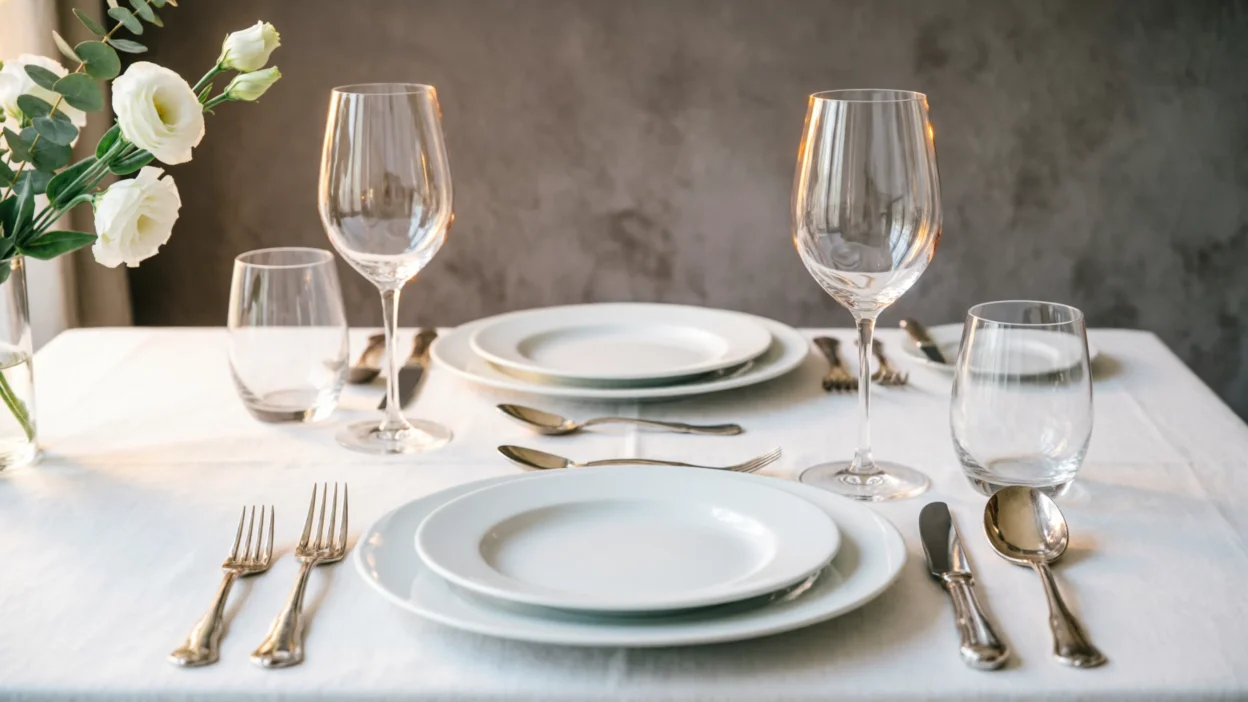
Forks always go on the left.
Fork Order Explained
- Salad fork on the outside
- Dinner fork closest to the plate
This follows the “outside-in” dining rule.
Knife and Spoon Placement
Knives and spoons belong on the right.
Knife Positioning
- Blade faces the plate
- Dinner knife closest to the plate
Spoon Positioning
- Soup spoon placed outside the knife
These placements reflect classic place setting etiquette.
Glassware Arrangement
Glass placement signals beverage order.
Standard Glass Placement
- Water glass above the knife
- Wine glasses to the right of the water glass
Formal settings may include multiple wine glasses.
Napkin Placement Options
Napkins add both function and style.
Acceptable Napkin Placements
- On the plate
- To the left of the forks
- Inside a glass for casual settings
Choose consistency to maintain balance.
Formal vs Casual Place Settings
Not all settings require formality.
Casual Place Setting
- Fewer utensils
- One glass
- Relaxed napkin placement
Formal Place Setting
- Multiple courses
- Full utensil lineup
- Structured glassware
Understanding the difference improves place setting etiquette flexibility.
Place Setting Etiquette for Special Meals
Occasion influences layout.
Dinner Parties
Balance elegance and comfort.
Business Meals
Keep settings neat and professional.
Holiday Tables
Decorative elements are acceptable, as long as functionality remains clear.
Common Place Setting Etiquette Mistakes
Small errors create confusion.
Mistakes to Avoid
- Incorrect utensil order
- Overcrowded table
- Random glass placement
- Napkins blocking utensils
Avoiding these supports proper place setting etiquette.
Place Setting Etiquette Dos and Don’ts
| Do | Don’t |
|---|---|
| Follow outside-in rule | Mix utensil sides |
| Align items evenly | Overcrowd space |
| Match formality | Guess placements |
| Keep it clean | Ignore symmetry |
Real-Life Place Setting Examples
Example: Formal Dinner
Multiple forks and glasses arranged symmetrically guide guests smoothly.
Example: Family Dinner
Simplified settings still follow correct left-right placement.
Example: Business Lunch
Minimal but precise settings show professionalism.
Each example reflects place setting etiquette in action.
Why Place Setting Etiquette Enhances Dining
Etiquette creates comfort.
Long-Term Benefits
- Fewer awkward moments
- Polished hosting skills
- Confident dining behavior
- Positive social impressions
Order allows guests to relax.
Final Thoughts on Place Setting Etiquette
Place setting etiquette blends tradition with practicality. By placing utensils correctly, aligning glassware thoughtfully, and adjusting formality to the occasion, you create an inviting dining experience.
These details may seem small, yet they strongly influence comfort and confidence at the table.
Ultimately, good place setting etiquette is about consideration. When guests feel guided rather than confused, meals become smoother, more enjoyable, and memorable for the right reasons.
FAQ,s
What is the basic rule of place setting etiquette?
Forks go on the left, knives and spoons go on the right.
Which fork should be used first?
Always use the outermost fork first.
Where does the napkin go in a place setting?
On the plate or to the left of the forks.
How many glasses are needed for a formal setting?
Usually a water glass and one or two wine glasses.
Is place setting etiquette required for casual meals?
Yes, basic placement still improves comfort and clarity.
Can place settings vary by culture?
Yes, some cultures follow different traditions and layouts.

Theo Blackmere is an American writer focused on etiquette and professional communication. He contributes insightful, well structured content to Etiquify. His writing emphasizes respect, clarity, and modern social awareness across personal and professional interactions.