
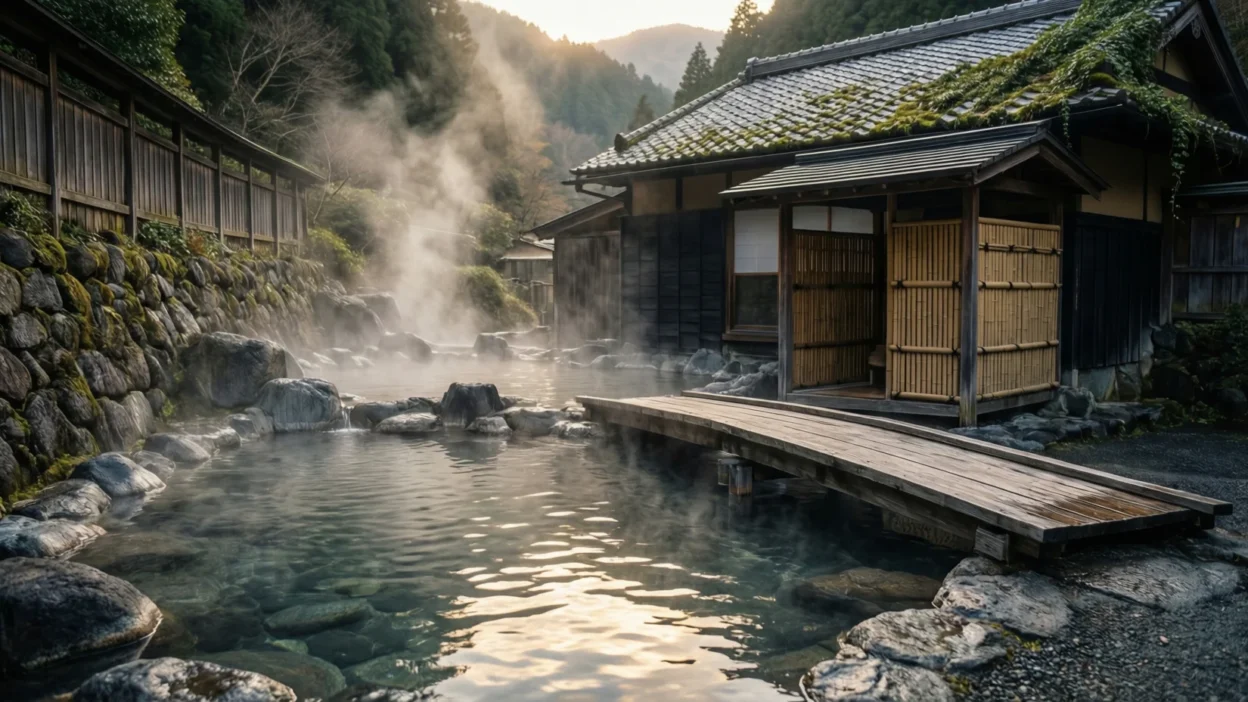
Visiting an onsen feels relaxing and memorable. However, proper onsen etiquette matters deeply in Japan.
Therefore, understanding the rules helps you avoid embarrassment. Moreover, following correct onsen etiquette shows respect for local culture.
As a result, your experience becomes peaceful, comfortable, and truly authentic.
What Is Onsen Etiquette?
Simple Cultural Meaning
Onsen etiquette refers to traditional rules followed when bathing in Japanese hot springs.
Essentially, these customs focus on cleanliness, modesty, and respect. Consequently, everyone enjoys a calm and hygienic environment.
Why Rules Exist
Historically, onsens served as shared community baths. Therefore, manners developed to protect comfort and privacy. Even today, these rules remain important.
Why Onsen Etiquette Is Important
Respect For Japanese Culture
Firstly, onsens reflect centuries-old traditions. Therefore, etiquette preserves cultural values. Moreover, locals appreciate visitors who follow the rules.
Comfort For All Bathers
Additionally, shared bathing requires consideration. As a result, etiquette prevents discomfort, noise, and hygiene issues.
Before Entering The Onsen
Wash Thoroughly First
Before soaking, you must wash your body completely. Typically, shower stations include stools, soap, and shampoo. Consequently, entering the bath clean is mandatory.
Remove All Clothing
Onsens are enjoyed fully nude. Therefore, swimsuits are not allowed. Although this feels unfamiliar, it is completely normal in Japan.
Leave Towels Outside
Small towels are used for modesty while walking. However, towels should never enter the bath water.
Inside The Onsen Bath
Enter Slowly And Quietly
Once clean, enter the water gently. Moreover, avoid splashing. As a result, the atmosphere remains calm.
Keep Hair Out Of Water
Long hair should be tied up. Sometimes, placing hair on your head helps. Consequently, water stays clean.
Stay Relaxed And Silent
Onsens promote relaxation. Therefore, loud talking, swimming, or playful behavior is discouraged.
Onsen Etiquette Dos And Don’ts
What You Should Do
- Shower before entering
- Tie up long hair
- Soak calmly
- Respect personal space
What You Should Never Do
- Wear swimsuits
- Bring phones or cameras
- Wash towels in the bath
- Stare at others
Following these points ensures proper onsen etiquette at all times.
Tattoo Rules In Onsens
Traditional Tattoo Restrictions
Traditionally, tattoos linked to organized crime. Therefore, many onsens still restrict tattooed guests.
Modern Solutions
Fortunately, some onsens allow tattoos. Alternatively, tattoo covers or private baths solve this issue easily.
Onsen Etiquette For Foreign Visitors
Common Beginner Mistakes
Foreign visitors often skip showering. Additionally, towels enter baths accidentally. However, awareness fixes these mistakes quickly.
Helpful Tips
Meanwhile, observing others helps. Moreover, staff usually guide politely. Consequently, learning onsen etiquette becomes easy.
Private Onsens And Ryokan Baths
Different Rules Apply
Private onsens offer more flexibility. However, cleanliness rules still apply. Therefore, showering remains required.
Family-Friendly Options
Many ryokans provide family baths. As a result, guests enjoy privacy while respecting tradition.
Seasonal And Regional Onsen Differences
Outdoor Onsens (Rotenburo)
Outdoor baths feel scenic and peaceful. Nevertheless, etiquette stays the same.
Regional Customs
Some regions have slight variations. Therefore, reading posted rules always helps.
Benefits Of Following Proper Onsen Etiquette
Better Experience
Firstly, etiquette improves relaxation. Secondly, it builds confidence. Moreover, you blend in naturally.
Cultural Appreciation
Additionally, respectful behavior earns appreciation from locals. Consequently, your travel experience becomes richer.
Frequently Asked Questions About Onsen Etiquette
Do I have to be fully nude in an onsen?
Yes, onsens require complete nudity without swimsuits.
Can I enter an onsen with tattoos?
Some onsens allow tattoos, while others require covers or private baths.
Is soap allowed inside the bath?
No, washing happens before entering the bath.
Can couples bathe together?
Only in private or mixed-gender onsens.
Are children allowed in onsens?
Yes, but parents must supervise and follow etiquette.
How long should I stay in the bath?
Usually 10–15 minutes per soak feels comfortable.
Final Thoughts
Onsen etiquette reflects respect, tradition, and shared comfort. Therefore, learning these customs enhances your visit.
Moreover, following proper onsen etiquette prevents awkward moments. As a result, you enjoy deep relaxation while honoring Japanese culture.
Ultimately, mindful behavior turns a simple bath into a meaningful cultural experience.
Caleb Rowan is an American content writer with a strong interest in social and digital etiquette. He creates thoughtful, approachable articles for Etiquify. His writing helps readers navigate modern conversations with professionalism, balance, and empathy.