Dining omakase is not just a meal — rather, it is a curated culinary journey. Because “omakase” means “I leave it up to you,” guests place complete trust in the chef’s expertise. Therefore, understanding omakase etiquette ensures you honor both the chef’s craft and Japanese dining tradition.
Moreover, proper behavior enhances the intimacy and artistry of the experience.
Understanding The Meaning Of Omakase
The word “omakase” comes from Japan’s traditional dining culture.
In fine sushi establishments across Japan, especially in cities like Tokyo, omakase reflects deep respect for seasonality, balance, and precision.
Trust The Chef Completely
Because the chef designs the progression, avoid requesting substitutions unless you have dietary restrictions. Trust demonstrates respect.
Arrive On Time — Always
Punctuality is essential.
Omakase meals follow a carefully timed sequence. Therefore, arriving late disrupts the rhythm of preparation and service.
If your reservation is at a traditional counter-style restaurant, the experience often begins simultaneously for all guests.
Sit Respectfully At The Counter
Most omakase meals take place at a sushi counter.
Engage Politely
While friendly interaction is welcome, avoid loud conversations or excessive phone use. Instead, maintain a calm and appreciative presence.
Avoid Strong Perfumes
Because scent affects taste, wearing heavy fragrance can interfere with the chef’s carefully balanced flavors.
How To Eat Sushi Properly
Precision matters.
Eat Immediately
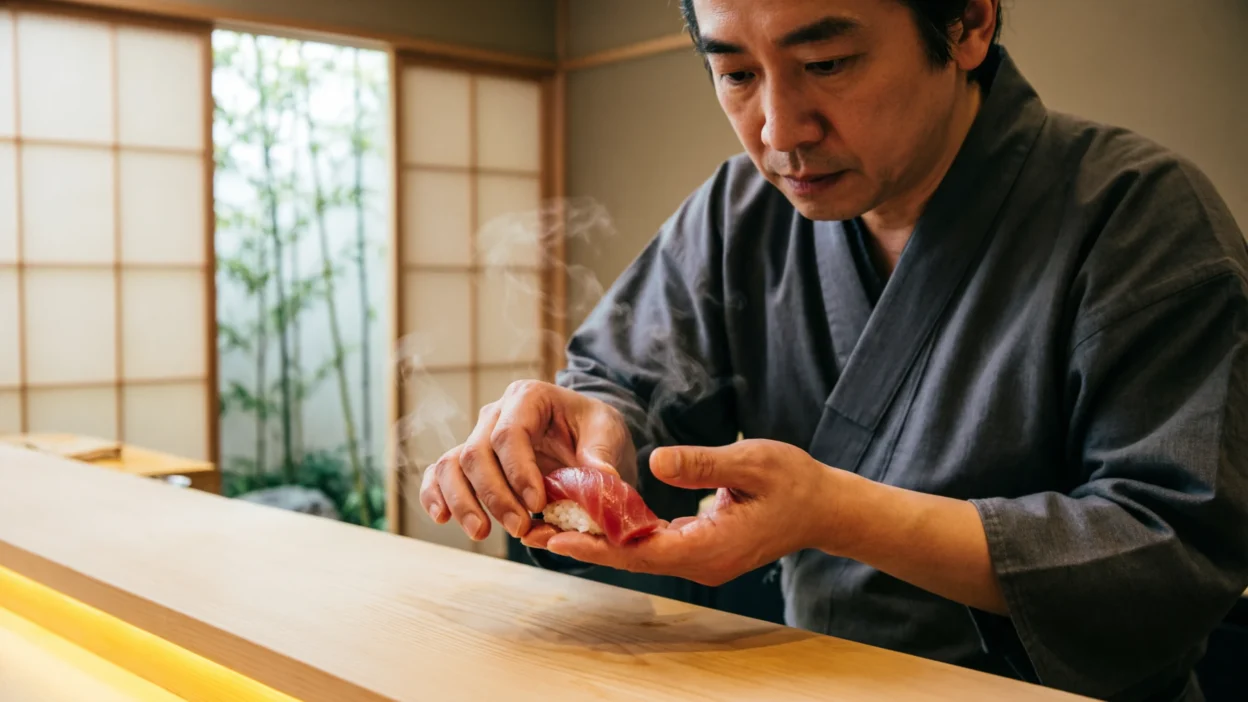
Once the chef places sushi before you, eat it promptly. The temperature, texture, and balance are optimized for that exact moment.
Use Hands Or Chopsticks
Traditionally, nigiri sushi may be eaten with clean hands. However, chopsticks are equally acceptable.
One Bite Preferred
Whenever possible, eat nigiri in one bite. Breaking it apart disrupts the intended balance.
Soy Sauce And Wasabi Etiquette
Less is more.
Do Not Over-Dip
The chef already seasons the sushi. Therefore, dipping excessively in soy sauce may overpower delicate flavors.
Trust The Wasabi Balance
If wasabi is included between the fish and rice, avoid adding extra unless necessary.
Photography Etiquette
While food photography is popular, remain mindful.
Ask First
Politely request permission before taking photos. In some high-end establishments in Kyoto, photography may be restricted.
Additionally, disable flash to preserve the ambiance.
Beverage Pairing Etiquette
Many guests enjoy sake with omakase.
Sip, Don’t Rush
Whether enjoying sake or green tea, sip slowly. Doing so aligns your pace with the chef’s presentation.
Traditional Japanese sake culture remains an integral part of fine dining in Japan.
Tipping Expectations
Tipping customs differ internationally.
In Japan, tipping is generally not customary and may even feel inappropriate. However, outside Japan — especially in cities like New York City — gratuity follows local dining standards.
Understanding location-based etiquette prevents awkwardness.
Expressing Appreciation
Gratitude completes the experience.
At the end of the meal, saying “Arigatou gozaimasu” (thank you very much) shows respect. A slight bow further reflects cultural awareness.
Common Omakase Etiquette Mistakes
Avoid these errors:
- Arriving late
- Overusing soy sauce
- Requesting heavy modifications
- Wearing strong cologne
- Speaking loudly across the counter
Awareness preserves harmony.
Why Omakase Etiquette Matters
Omakase is an art form. Every slice of fish, every grain of rice, and every plating decision reflects years of discipline and mastery. Therefore, respectful conduct protects the integrity of the chef’s craft.
When diners observe etiquette, the experience becomes immersive rather than transactional.
Final Thoughts On Omakase Etiquette
Omakase is more than dining — it is dialogue without excess words. Because the chef communicates through texture, temperature, and timing, your role is to receive with attentiveness and gratitude.
Furthermore, mindful behavior strengthens mutual respect across cultures. When you arrive punctually, trust fully, and savor thoughtfully, you elevate the entire experience. Ultimately, omakase etiquette transforms a meal into a refined cultural exchange.
By honoring tradition, you not only enjoy exceptional cuisine but also participate in centuries of Japanese culinary heritage.
Therefore, dine with humility, remain present in each bite, and allow the chef’s artistry to unfold naturally before you.
FAQ,s
What does omakase mean?
It means “I leave it up to you,” allowing the chef to decide your meal.
Is it rude to request substitutions?
Yes, unless you have dietary restrictions.
Should sushi be eaten immediately?
Yes, for optimal flavor and temperature balance.
Is tipping required in Japan?
No, tipping is generally not customary in Japan.
Can I take photos during omakase?
Yes, but always ask permission first.
Is it okay to talk to the chef?
Yes, but keep conversations polite and minimal.

Theo Blackmere is an American writer focused on etiquette and professional communication. He contributes insightful, well structured content to Etiquify. His writing emphasizes respect, clarity, and modern social awareness across personal and professional interactions.