Japanese business etiquette plays a crucial role in building trust, respect, and long-term professional relationships.
Although global business feels informal today, Japanese culture still values tradition, hierarchy, and politeness deeply.
Therefore, understanding Japanese business etiquette helps professionals communicate effectively and avoid costly misunderstandings.
Moreover, business interactions in Japan emphasize harmony and respect. As a result, behavior, gestures, and communication style matter greatly.
When Japanese business etiquette is followed correctly, relationships strengthen, negotiations improve, and credibility grows.
This guide explains Japanese business etiquette clearly with practical advice, real examples, and easy-to-follow rules.
What Is Japanese Business Etiquette?
Japanese business etiquette refers to traditional and modern professional behaviors expected in Japanese workplaces.
While practices evolve, respect, humility, and formality remain essential. Consequently, etiquette shapes every interaction, from greetings to negotiations.
Why Japanese Business Etiquette Matters
Japanese business etiquette supports successful professional relationships.
Japanese business etiquette matters because:
- Respect builds trust
- Harmony prevents conflict
- Hierarchy guides communication
- First impressions last
Therefore, etiquette influences business outcomes.
Greetings And Bowing Etiquette
Proper Bowing Practices
Greetings set the tone immediately.
- Bow when greeting and departing
- Match bow depth to seniority
- Avoid excessive eye contact
- Combine bows with polite greetings
Respectful bows show cultural awareness.
Business Card Etiquette In Japan
Exchanging Meishi Correctly
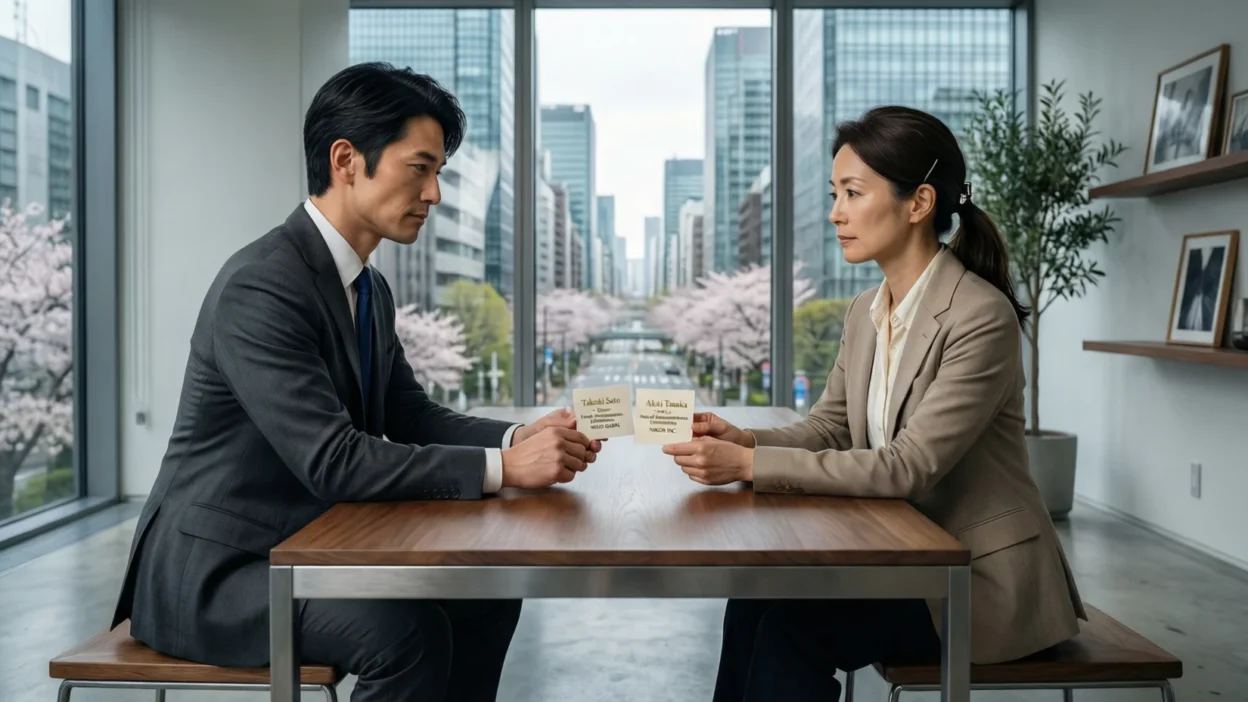
Business cards hold great importance.
- Present cards with both hands
- Bow slightly during exchange
- Read cards carefully
- Never write on cards
Proper handling shows respect.
Communication Style Etiquette
Indirect And Polite Communication
Japanese communication values subtlety.
- Avoid direct confrontation
- Use polite language
- Read nonverbal cues
- Listen attentively
Gentle communication preserves harmony.
Hierarchy And Respect Etiquette
Understanding Workplace Structure
Hierarchy shapes interactions.
- Address senior members formally
- Wait for older people to speak first
- Follow seating arrangements
- Respect decision-making processes
Acknowledging hierarchy prevents offense.
Meeting Etiquette In Japanese Business
Conducting Yourself Professionally
Meetings follow clear structure.
- Arrive early
- Dress conservatively
- Follow agendas closely
- Avoid interrupting others
Preparedness demonstrates professionalism.
Dining Etiquette In Business Settings
Business Meals And Socializing
Meals strengthen relationships.
- Wait to be seated
- Begin eating after the host
- Pour drinks for others
- Avoid loud behavior
Dining etiquette reflects character.
Gift Giving Etiquette In Japan
Choosing And Presenting Gifts
Gifts symbolize goodwill.
- Present gifts with both hands
- Choose modest packaging
- Avoid expensive items
- Expect gifts to be unopened
Thoughtful gifting shows sincerity.
Dress Code And Appearance Etiquette
Professional Presentation Standards
Appearance reflects respect.
- Wear conservative business attire
- Choose neutral colors
- Maintain neat grooming
Professional appearance builds credibility.
Punctuality And Time Etiquette
Respecting Schedules
Time reflects respect.
- Arrive early
- Avoid last-minute changes
- Respect deadlines
Punctuality shows reliability.
Japanese Business Etiquette Dos And Don’ts
✅ Dos
- Do bow respectfully
- Do follow hierarchy
- Do listen carefully
- Do remain humble
❌ Don’ts
- Don’t interrupt others
- Don’t be overly direct
- Don’t ignore business card customs
- Don’t rush decisions
Common Japanese Business Etiquette Mistakes
Mistakes often occur unintentionally.
Frequent Errors
- Overly casual behavior
- Direct criticism
- Ignoring hierarchy
- Improper card handling
Avoiding these mistakes builds trust.
Cultural Awareness In Japanese Business Etiquette
Respecting Traditional Values
Cultural sensitivity matters.
- Harmony over individualism
- Group consensus preferred
- Politeness valued highly
Therefore, cultural awareness improves collaboration.
Frequently Asked Questions
What is Japanese business etiquette?
It is respectful professional behavior based on tradition and hierarchy.
Is bowing required in business?
Yes, bowing is expected.
How important are business cards in Japan?
They are extremely important.
Is direct communication acceptable?
Indirect communication is preferred.
Does punctuality matter in Japan?
Yes, punctuality is essential.
Are gifts expected in business?
Gifts are common but should be modest.
Final Thoughts
Japanese business etiquette reflects deep respect for tradition, harmony, and professionalism.
While global practices evolve, these cultural values remain central to successful business interactions in Japan.
Therefore, learning proper etiquette strengthens relationships, prevents misunderstandings, and builds lasting trust.
When professionals approach Japanese business etiquette with humility and awareness, collaboration becomes smoother, negotiations improve, and long term partnerships flourish naturally across cultural boundaries.

Theo Blackmere is an American writer focused on etiquette and professional communication. He contributes insightful, well structured content to Etiquify. His writing emphasizes respect, clarity, and modern social awareness across personal and professional interactions.