
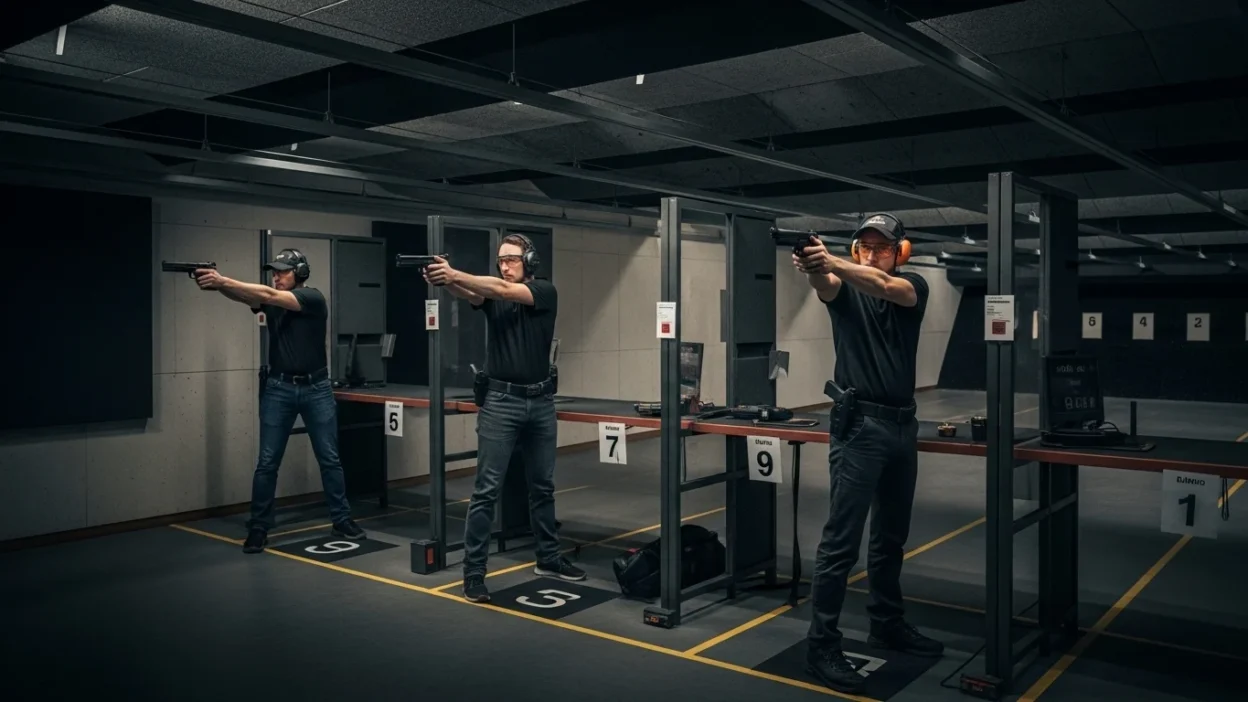
Shooting ranges operate on discipline, awareness, and strict safety standards. Proper gun range etiquette ensures that every participant feels secure, respected, and focused. Because firearms require absolute responsibility, even small mistakes can carry serious consequences.
Moreover, strong etiquette supports a culture of safety and professionalism. Whether you are a beginner or an experienced shooter, understanding range behavior prevents accidents and builds trust. By following established norms and official range rules, you contribute to a controlled and respectful environment.
This guide outlines essential gun range etiquette, safety habits, and common mistakes to avoid for a safe experience.
What Is Gun Range Etiquette?
Gun range etiquette refers to the expected safety practices and respectful behaviors followed at shooting ranges.
Why Gun Range Etiquette Matters
- Prevents accidents and injuries
- Protects all participants
- Promotes responsible firearm handling
- Maintains a controlled environment
Safety always comes first at any range.
Following Official Range Rules
Every range has posted policies.
Respecting Range Authority
Most ranges assign a Range Safety Officer (RSO).
Key expectations
- Follow RSO commands immediately
- Read posted rules carefully
- Ask questions if unsure
Compliance reflects responsible gun range etiquette.
Basic Firearm Safety Principles
Universal safety rules apply everywhere.
Core Safety Guidelines
Always follow these principles:
- Treat every firearm as loaded
- Keep your finger off the trigger until ready to shoot
- Never point a firearm at anything you do not intend to shoot
- Be sure of your target and what’s beyond it
These rules form the foundation of gun range etiquette.
Proper Handling on the Firing Line
The firing line requires discipline.
Behavior During Live Fire
Maintain focus at all times.
Essential habits
- Keep muzzle pointed downrange
- Wear eye and ear protection
- Avoid distracting others
Attention reduces risk instantly.
Ceasefire Etiquette
Ceasefires demand full cooperation.
What to Do During Ceasefire
When “ceasefire” is called:
- Stop shooting immediately
- Step back from the line
- Keep hands visible
- Do not touch firearms
Strict compliance defines proper gun range etiquette.
Communication and Courtesy
Clear communication prevents confusion.
Speaking Respectfully
Ranges can be loud environments.
Communication tips
- Use clear signals
- Avoid shouting unnecessarily
- Be patient with beginners
Respectful tone supports a positive atmosphere.
Cleaning and Maintenance Etiquette
Shared spaces require responsibility.
Keeping the Area Clean
Leave the space better than you found it.
Clean-up habits
- Pick up spent brass if required
- Dispose of trash properly
- Store equipment neatly
Clean ranges reflect responsible gun range etiquette.
Handling Malfunctions Safely
Issues require calm responses.
Dealing with Equipment Problems
If something feels wrong:
- Keep firearm pointed downrange
- Remove your finger from the trigger
- Ask the RSO for assistance
Calm handling prevents escalation.
Respecting Other Shooters
Focus matters at ranges.
Avoiding Distractions
Courtesy keeps everyone safe.
Avoid
- Sudden movements behind shooters
- Unnecessary touching of others’ equipment
- Interrupting during active shooting
Awareness protects concentration.
Bringing Guests to the Range
Guests reflect your responsibility.
Supervising New Shooters
Guide them carefully.
Guest etiquette
- Explain safety rules clearly
- Monitor behavior closely
- Ensure proper protection
Supervision strengthens gun range etiquette.
Common Gun Range Etiquette Mistakes
Avoid these behaviors.
Frequent Issues
- Handling firearms during ceasefire
- Ignoring safety commands
- Sweeping others with muzzle
- Failing to wear protection
Safety violations are never acceptable.
Gun Range Etiquette Dos and Don’ts
| Do | Don’t |
|---|---|
| Follow RSO commands | Ignore ceasefire |
| Keep muzzle downrange | Point firearm carelessly |
| Wear protection | Remove safety gear |
| Clean up after shooting | Leave debris behind |
Real-Life Gun Range Etiquette Examples
Example: Ceasefire Called
A shooter immediately steps back and keeps hands visible.
Example: New Shooter Nearby
An experienced shooter offers calm guidance without distraction.
Example: Equipment Jam
The firearm remains pointed safely downrange while assistance is requested.
Each situation demonstrates strong gun range etiquette.
Why Gun Range Etiquette Is Essential
Firearms demand respect.
Long-Term Benefits
- Reduced accident risk
- Stronger safety culture
- Increased confidence
- Professional range environment
Etiquette preserves safety standards.
Final Thoughts on Gun Range Etiette
Gun range etiquette centers on discipline, awareness, and unwavering respect for safety rules. By following official instructions, maintaining muzzle control, respecting ceasefire commands, and supporting fellow shooters, you help create a secure environment for everyone.
Ultimately, safety is non negotiable. When all participants commit to proper gun range etiquette, the range remains a controlled, responsible, and professional space for training and recreation.
FAQ,s
What is basic gun range etiquette?
Follow safety rules, obey the RSO, and handle firearms responsibly.
What should you do during a ceasefire?
Stop shooting immediately and step away from firearms.
Is eye and ear protection required?
Yes, protective gear is essential at all ranges.
Can you touch firearms during ceasefire?
No, firearms must remain untouched.
Why is gun range etiquette important?
It prevents accidents and maintains a safe environment.
Should beginners ask questions at the range?
Yes, asking improves safety and confidence.

Theo Blackmere is an American writer focused on etiquette and professional communication. He contributes insightful, well structured content to Etiquify. His writing emphasizes respect, clarity, and modern social awareness across personal and professional interactions.