
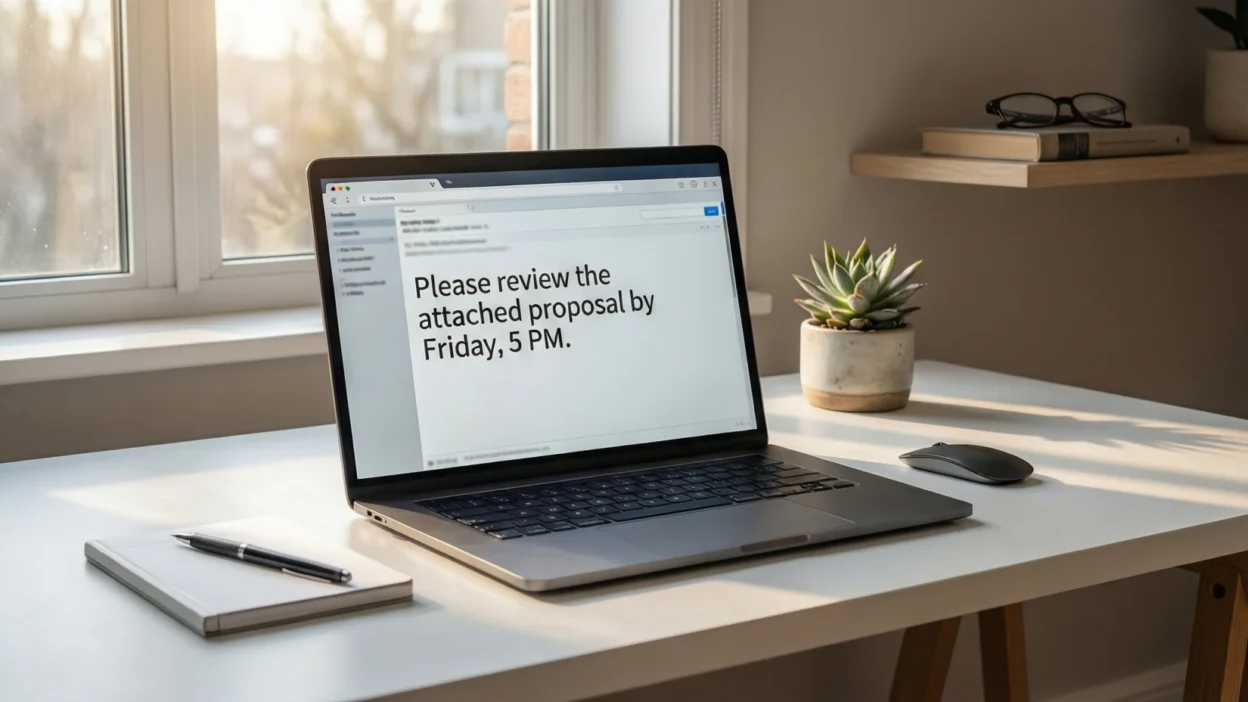
Email etiquette refers to the set of rules and best practices that guide polite, clear, and professional communication through email.
These guidelines cover tone, structure, timing, and respect for the recipient’s time and expectations.
Because email lacks facial expressions and vocal tone, messages can easily be misunderstood.
Therefore, proper email etiquette helps ensure clarity while preventing confusion or unintended offense.
In both professional and personal contexts, respectful email communication strengthens relationships and builds credibility.
Meaning of Email Etiquette
Polite Written Communication
Email etiquette emphasizes respectful language and appropriate tone.
Clear and Purposeful Messages
Each email should have a clear reason and direction.
Respect for Time
Well-structured emails save time for both sender and recipient.
Why Email Etiquette Is Important
Prevents Miscommunication
Clear wording reduces misunderstandings and confusion.
Builds Professional Image
Polite emails reflect reliability and competence.
Improves Efficiency
Well-written messages lead to faster responses and better outcomes.
Maintains Respectful Relationships
Thoughtful communication encourages trust and cooperation.
Basic Rules of Email Etiquette
Use a Clear Subject Line
The subject should summarize the email’s purpose.
Start with a Polite Greeting
Professional greetings set a respectful tone.
Keep the Message Focused
Each email should address one main topic whenever possible.
End Courteously
A polite closing leaves a positive impression.
Professional Email Etiquette at Work
Maintain a Professional Tone
Avoid slang, excessive punctuation, or casual language.
Respond in a Timely Manner
Prompt replies show respect and responsibility.
Proofread Before Sending
Spelling and grammar mistakes reduce credibility.
Email Etiquette for Tone and Language
Be Clear and Direct
Short, clear sentences improve understanding.
Avoid All Caps
Capital letters can appear aggressive.
Use Neutral Language
Neutral wording prevents emotional misinterpretation.
Email Etiquette for Attachments and Links
Mention Attachments Clearly
Always reference attached files in the message.
Use Appropriate File Names
Clear file names help recipients identify documents.
Avoid Large Files When Possible
Large attachments can inconvenience recipients.
Email Etiquette for CC and BCC
Use CC Thoughtfully
Only include people who need the information.
Use BCC for Privacy
BCC protects email addresses in group messages.
Avoid Overloading Recipients
Unnecessary emails reduce attention and effectiveness.
Common Email Etiquette Mistakes
Sending Emails Without Proofreading
Errors weaken professionalism.
Writing Long, Unstructured Messages
Lengthy emails reduce clarity and response rates.
Using an Inappropriate Tone
Tone mismatches often cause misunderstandings.
Email Etiquette Dos and Don’ts
| Do | Don’t |
|---|---|
| Use a clear subject line | Leave the subject blank |
| Proofread messages | Send emails with errors |
| Be polite and concise | Sound demanding or rude |
| Respond promptly | Ignore emails |
| Use professional language | Use slang or emojis |
Email Etiquette in Different Situations
Workplace Communication
Professional tone and clarity are essential.
Academic Emails
Respectful language and proper titles matter.
Personal Emails
Tone may be relaxed but should remain considerate.
Frequently Asked Questions
What is email etiquette?
Email etiquette is the practice of writing clear, polite, and respectful email messages.
Why is email etiquette important at work?
It supports professionalism, clarity, and effective communication.
How formal should an email be?
Formality depends on the relationship and context.
Is it rude to use short replies?
Short replies are acceptable if they remain polite and clear.
Should emails always be replied to?
Yes. A response, even brief, shows respect and acknowledgment.
Conclusion
Understanding what email etiquette is plays a critical role in modern communication.
Since email is widely used in professional, academic, and personal settings, knowing how to communicate respectfully and clearly prevents misunderstandings and strengthens relationships.
Moreover, strong email etiquette demonstrates professionalism, emotional awareness, and respect for others’ time.
By using clear subject lines, appropriate tone, and thoughtful structure, individuals create messages that are easy to read and respond to.
Ultimately, practicing good email etiquette leads to better communication, improved trust, and more successful interactions across all areas of life.