
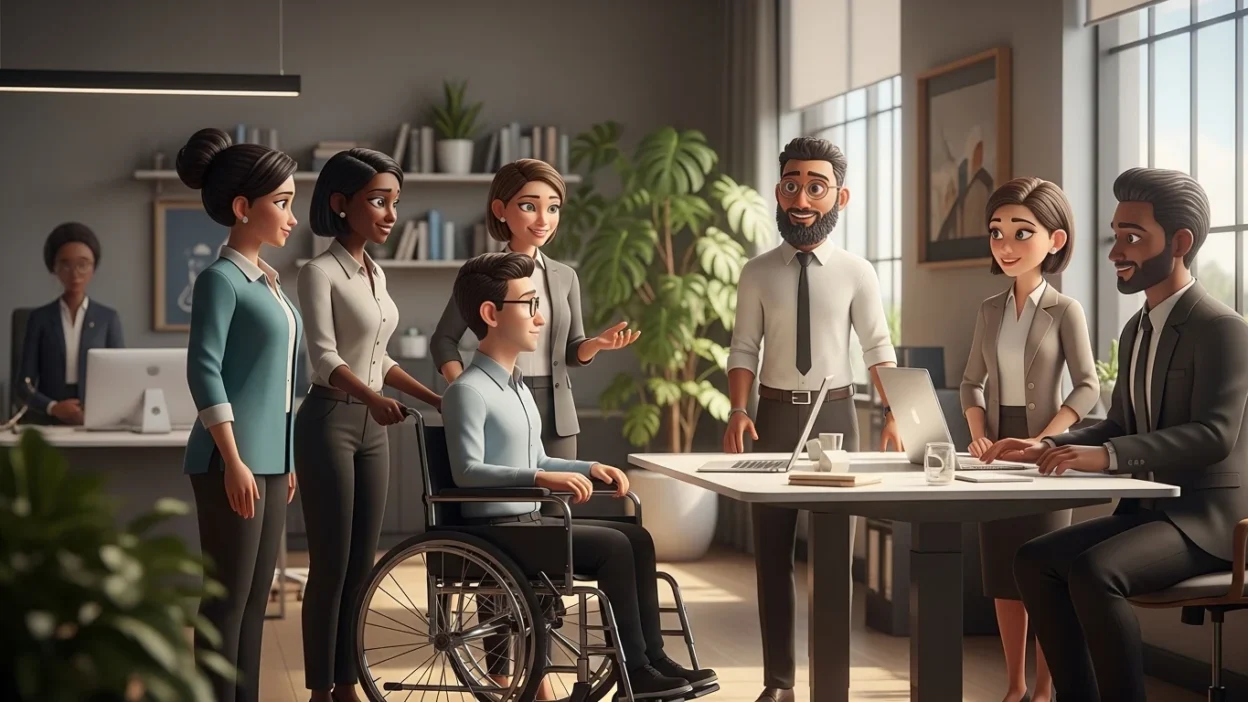
Disability etiquette centers on respect, awareness, and inclusive behavior. Because individuals with disabilities navigate diverse environments daily, thoughtful conduct ensures comfort, equality, and dignity. Whether at work, school, or social gatherings, understanding proper interaction builds stronger, more compassionate communities.
Moreover, practicing respectful behavior removes barriers and promotes genuine inclusion rather than sympathy.
What Is Disability Etiquette?
Disability etiquette refers to appropriate communication and behavior toward people with physical, sensory, intellectual, or invisible disabilities.
Focus On The Person First
Always see the individual before the disability. Instead of defining someone by a condition, recognize their personality, skills, and preferences.
For example, person-first language is often encouraged by organizations like World Health Organization, which emphasizes dignity and equality in health and social discussions.
Communicating Respectfully
Clear and considerate communication builds comfort.
Speak Directly To The Individual
If someone uses an interpreter, companion, or support worker, address the person with the disability directly. Eye contact and natural tone demonstrate equality.
Avoid Assumptions
Do not assume limitations, preferences, or needs. Instead, politely ask, “How can I help?” if assistance seems necessary.
Offering Help The Right Way
Support should empower, not patronize.
Ask Before Assisting
Always request permission before offering physical help, especially with mobility devices. Unsolicited assistance may feel intrusive.
Respect Mobility Aids
Wheelchairs, canes, and service animals are personal extensions of independence. Therefore, avoid touching or leaning on them without consent.
Service animal guidelines are widely reinforced by agencies like the Americans with Disabilities Act, which protects accessibility and equal treatment.
Language Matters
Words shape perception.
Use Inclusive Language
Avoid outdated or offensive terms. Instead, use respectful terminology such as “person with a disability” unless the individual prefers identity-first language.
Additionally, refrain from using disability-related terms as jokes or insults.
Social And Workplace Etiquette
Professional environments require awareness.
Ensure Accessibility
When organizing events or meetings:
- Provide accessible entrances
- Offer clear signage
- Share materials in accessible formats if needed
Inclusive planning demonstrates leadership and professionalism.
Invisible Disabilities
Not all disabilities are visible.
Show Patience And Understanding
Conditions such as chronic pain, hearing loss, or cognitive challenges may not be obvious. Therefore, avoid questioning someone’s legitimacy based on appearance alone.
Respect privacy and personal boundaries at all times.
Etiquette Around Service Animals
Service animals perform essential tasks.
Follow Proper Behavior
- Do not pet or distract the animal
- Avoid feeding it
- Speak to the handler, not the animal
Disrupting a working service animal can compromise safety and independence.
Children And Disability Awareness
Early education builds inclusive futures.
Model Respectful Behavior
Parents and teachers should encourage children to ask polite questions respectfully rather than stare. Open dialogue reduces fear and misunderstanding.
Common Disability Etiquette Mistakes
Although intentions may be positive, certain actions can feel uncomfortable:
- Speaking loudly without being asked
- Using a condescending tone
- Offering pity instead of equality
- Making personal medical inquiries
Awareness prevents discomfort and promotes genuine respect.
Why Disability Etiquette Truly Matters
Strong disability etiquette fosters inclusion, equality, and social harmony. Furthermore, it strengthens workplace culture and community trust. When individuals prioritize dignity, barriers decrease and collaboration increases.
Ultimately, respectful behavior reflects emotional intelligence and social responsibility.
Final Thoughts On Disability Etiquette
Disability etiquette is not about perfection; rather, it is about awareness and willingness to learn.
By listening, asking respectfully, and treating everyone as equals, we create environments where all individuals feel valued. Small adjustments in behavior can produce meaningful social change.
FAQ,s
Should I offer help to someone with a disability?
Yes, but always ask first before assisting.
Is it okay to ask about someone’s disability?
Only if it is relevant and the person seems comfortable sharing.
How should I interact with a service animal?
Do not pet or distract it; address the handler instead.
What if I use the wrong term accidentally?
Apologize briefly, correct yourself, and move forward respectfully.
Are invisible disabilities common?
Yes, many disabilities are not immediately visible.
Why is person-first language important?
Because it emphasizes dignity and individuality over limitations.

Evan Whitmore is an American writer focused on modern etiquette and communication. He contributes practical, reader friendly content to Etiquify. His work emphasizes respect, clarity, and confidence in everyday personal and professional interactions.