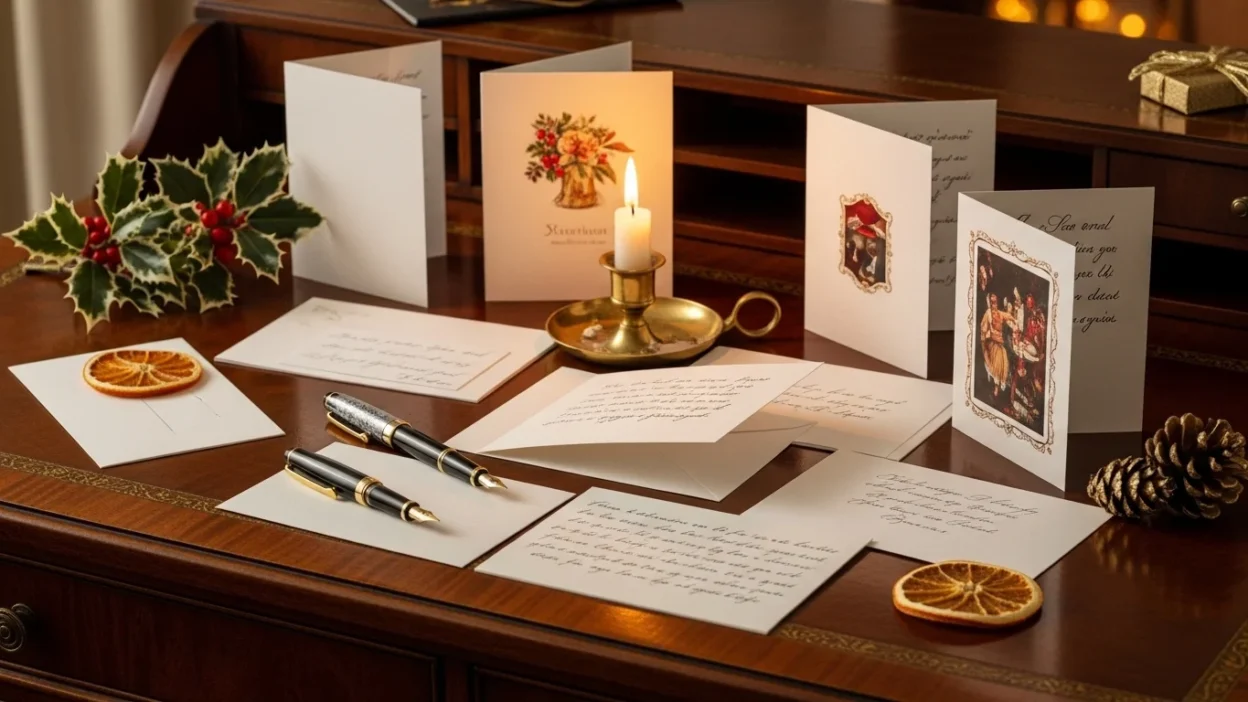
Sending holiday cards remains a timeless tradition. Because Christmas celebrates connection and goodwill, understanding Christmas card etiquette ensures your greetings feel sincere, respectful, and appropriate. Whether mailing personal notes or professional greetings, thoughtful details make a lasting impression.
Moreover, sending cards correctly strengthens relationships and reflects social awareness.
When To Send Christmas Cards
Timing plays an important role.
Mail Cards Early
Ideally, send Christmas cards between December 1st and December 15th. Consequently, recipients receive them before holiday travel begins.
Christmas is celebrated annually on December 25 in many countries, including the United States and the United Kingdom.
Avoid Sending Too Late
Although late cards are appreciated, sending them after the New Year may feel like an afterthought. Therefore, plan ahead.
Choosing The Right Card
Your selection reflects personality and intention.
Religious Or Secular Design?
If recipients celebrate Christmas religiously, a nativity-themed card may feel meaningful. However, for diverse mailing lists, neutral seasonal designs are often safer.
Christmas traditions are widely associated with Christian celebrations worldwide.
Personalization Matters
A handwritten message adds warmth.
Add A Short Personal Note
Even a few sincere sentences make a difference. Instead of signing only your name, mention something personal or express gratitude.
Sign Properly
Families often sign with first names only, while professional contacts may require full names and titles.
Addressing The Envelope Correctly
Proper addressing shows attention to detail.
Use Formal Titles When Appropriate
For business contacts or elders, include titles such as Mr., Mrs., or Dr. Additionally, ensure correct spelling of names.
Family Address Format
For families, you may write “The Ahmed Family” or list individual names respectfully.
Business Christmas Card Etiquette
Professional greetings require balance.
Keep Messages Neutral
In corporate settings, avoid overly personal or religious statements unless appropriate for your audience.
Many companies headquartered in cities like New York City send professionally branded holiday cards to clients and partners.
Handwritten Signatures Add Value
Although printed messages are common, a handwritten signature enhances authenticity.
Including Photos In Cards
Photo cards remain popular.
Choose Appropriate Images
Select high-quality family photos that reflect positivity and warmth. However, avoid controversial or overly casual images.
Handling Diverse Beliefs
Cultural sensitivity strengthens relationships.
Use Inclusive Language When Unsure
If you are uncertain about someone’s religious beliefs, phrases like “Season’s Greetings” may feel more appropriate than explicitly religious messages.
Respectful inclusivity prevents discomfort.
Responding To Christmas Cards
Reciprocity reflects courtesy.
Acknowledge Received Cards
If someone sends you a card, respond with one of your own or send a thoughtful message of appreciation.
Common Christmas Card Etiquette Mistakes
Avoid these missteps:
- Misspelling names
- Sending outdated family photos
- Including lengthy newsletters without context
- Forgetting return addresses
Attention to detail ensures professionalism.
Why Christmas Card Etiquette Matters
Practicing proper etiquette:
- Strengthens personal relationships
- Maintains professional goodwill
- Demonstrates thoughtfulness
- Preserves cherished traditions
Ultimately, small gestures create meaningful holiday connections.
Final Thoughts On Christmas Card Etiquette
Christmas cards symbolize warmth, gratitude, and remembrance.
By sending them on time, personalizing messages, and respecting cultural differences, you honor both tradition and relationship.
Thoughtful effort transforms a simple card into a lasting memory.
FAQ,s
When should Christmas cards be mailed?
Between early and mid-December for timely delivery.
Is it necessary to handwrite messages?
Yes, handwritten notes feel more personal and sincere.
Can businesses send Christmas cards?
Yes, but messages should remain professional and inclusive.
Should I send cards to everyone who sends me one?
Responding is considered polite and appreciative.
Are photo cards appropriate?
Yes, if images are tasteful and high-quality.
Is religious wording always appropriate?
Only if you are certain the recipient shares the belief.

Caleb Rowan is an American content writer with a strong interest in social and digital etiquette. He creates thoughtful, approachable articles for Etiquify. His writing helps readers navigate modern conversations with professionalism, balance, and empathy.