
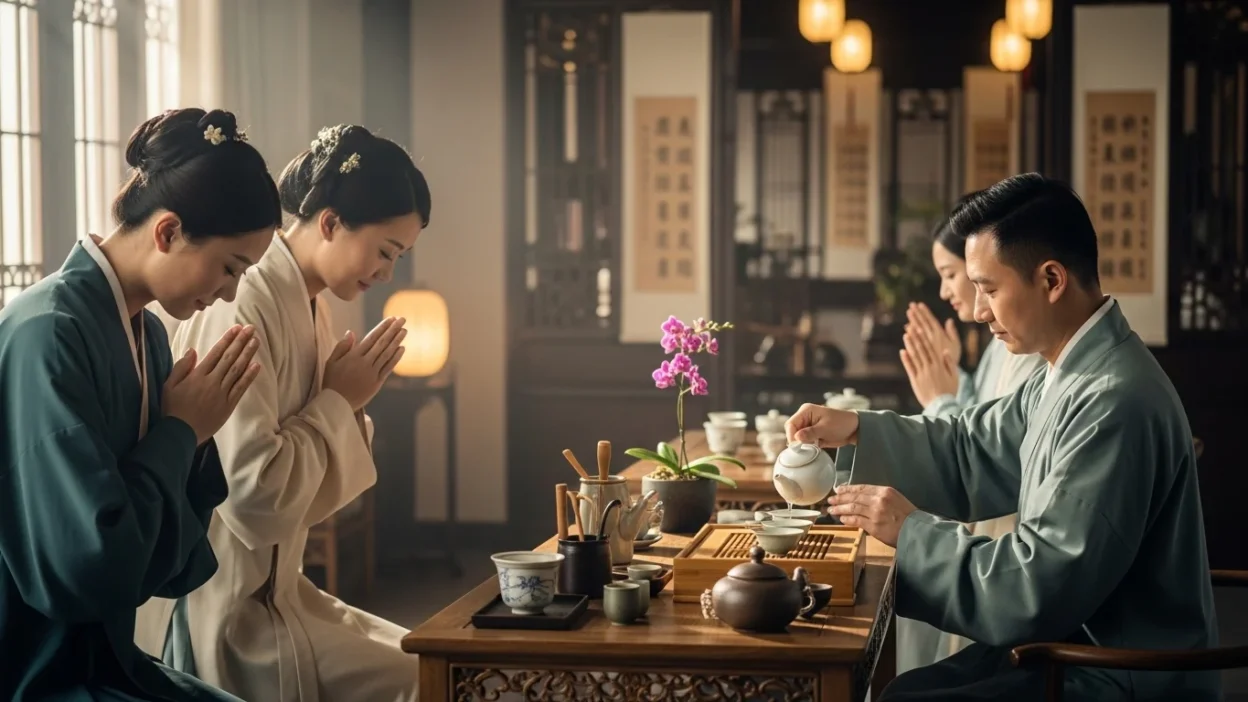
China offers a rich cultural heritage shaped by respect, tradition, and social harmony. Therefore, understanding proper Chinese customs and etiquette helps you interact confidently and respectfully in both social and professional settings.
Moreover, everyday actions—such as greetings, dining behavior, and gift-giving—carry deep meaning. When you follow correct Chinese customs and etiquette, you show cultural awareness and build stronger relationships.
Additionally, whether you travel, study, or work in China, practicing proper Chinese customs and etiquette ensures smooth communication and avoids misunderstandings. As a result, your experience becomes more meaningful and enjoyable.
Why Chinese Customs and Etiquette Matter
Culture influences behavior in every situation. Therefore, knowing expectations helps you adapt quickly.
Good Chinese customs and etiquette help:
- Show respect to others
- Build trust and relationships
- Avoid social mistakes
- Improve communication
- Participate confidently in traditions
Because respect and harmony remain central values, etiquette plays a major role.
Greetings and First Impressions
First impressions matter greatly in Chinese culture. Therefore, greetings should feel polite and respectful.
Proper Greeting Tips
- Offer a slight nod or handshake
- Address people formally when appropriate
- Use titles and surnames
Following these habits reflects strong Chinese customs and etiquette.
Respect for Elders and Hierarchy
Hierarchy shapes many interactions. Therefore, showing respect to elders becomes essential.
Helpful practices include:
- Greet elders first
- Offer seats to older people
- Speak respectfully
Respecting hierarchy reflects proper Chinese customs and etiquette.
Dining Etiquette in China
Meals hold social importance. Therefore, table manners must be followed carefully.
Key Dining Rules
- Wait for the host to begin eating
- Use chopsticks properly
- Avoid sticking chopsticks upright in rice
Good table manners strengthen your Chinese customs and etiquette.
Gift Giving Etiquette
Gift-giving shows appreciation and respect. However, it follows specific customs.
Important Tips
- Offer gifts with both hands
- Avoid giving clocks or sharp objects
- Do not expect gifts to be opened immediately
Following these rules improves your Chinese customs and etiquette.
Communication Style
Communication in China often feels indirect. Therefore, understanding subtle cues matters.
Helpful tips:
- Avoid saying “no” directly
- Use polite and respectful language
- Pay attention to tone and body language
Clear and respectful communication supports strong Chinese customs and etiquette.
Business Etiquette in China
Professional settings require formal behavior. Therefore, understanding business culture becomes essential.
Business Tips
- Exchange business cards with both hands
- Dress formally
- Show respect during meetings
These practices reflect proper Chinese customs and etiquette in business environments.
Public Behavior and Manners
Public conduct reflects personal character. Therefore, polite behavior matters everywhere.
Good habits include:
- Avoid loud conversations
- Respect queues
- Maintain cleanliness
Public manners strengthen your Chinese customs and etiquette.
Common Mistakes to Avoid
Visitors often make simple mistakes.
Avoid these:
- Ignoring hierarchy
- Using chopsticks incorrectly
- Being overly direct
- Disrespecting traditions
Avoiding these improves your Chinese customs and etiquette quickly.
Quick Chinese Etiquette Checklist
| Situation | Proper Action |
|---|---|
| Greeting | Be polite and respectful |
| Dining | Follow table manners |
| Gifts | Give thoughtfully |
| Communication | Be indirect and polite |
| Public behavior | Stay respectful |
This checklist helps maintain proper Chinese customs and etiquette.
Final Thoughts
Understanding cultural expectations helps you navigate social situations with confidence. Therefore, practicing proper Chinese customs and etiquette ensures respectful and meaningful interactions.
Moreover, small actions such as polite greetings, respectful communication, and proper dining manners create lasting impressions.
Ultimately, when you follow strong Chinese customs and etiquette, you build trust and enjoy a richer cultural experience.
FAQs
What are Chinese customs and etiquette
They are social rules and traditions that guide respectful behavior in Chinese culture.
Why is respect important in Chinese culture
Respect maintains harmony and strengthens relationships in both social and professional settings.
How should I greet someone in China
Use a polite greeting, slight nod, or handshake while addressing them respectfully.
What should I avoid giving as a gift
Avoid clocks, sharp objects, or items associated with negative meanings.
Is communication direct in China
No, communication is often indirect and polite.
Why is dining etiquette important in China
Meals are social events, and proper manners show respect to hosts and guests.

Evan Whitmore is an American writer focused on modern etiquette and communication. He contributes practical, reader friendly content to Etiquify. His work emphasizes respect, clarity, and confidence in everyday personal and professional interactions.