
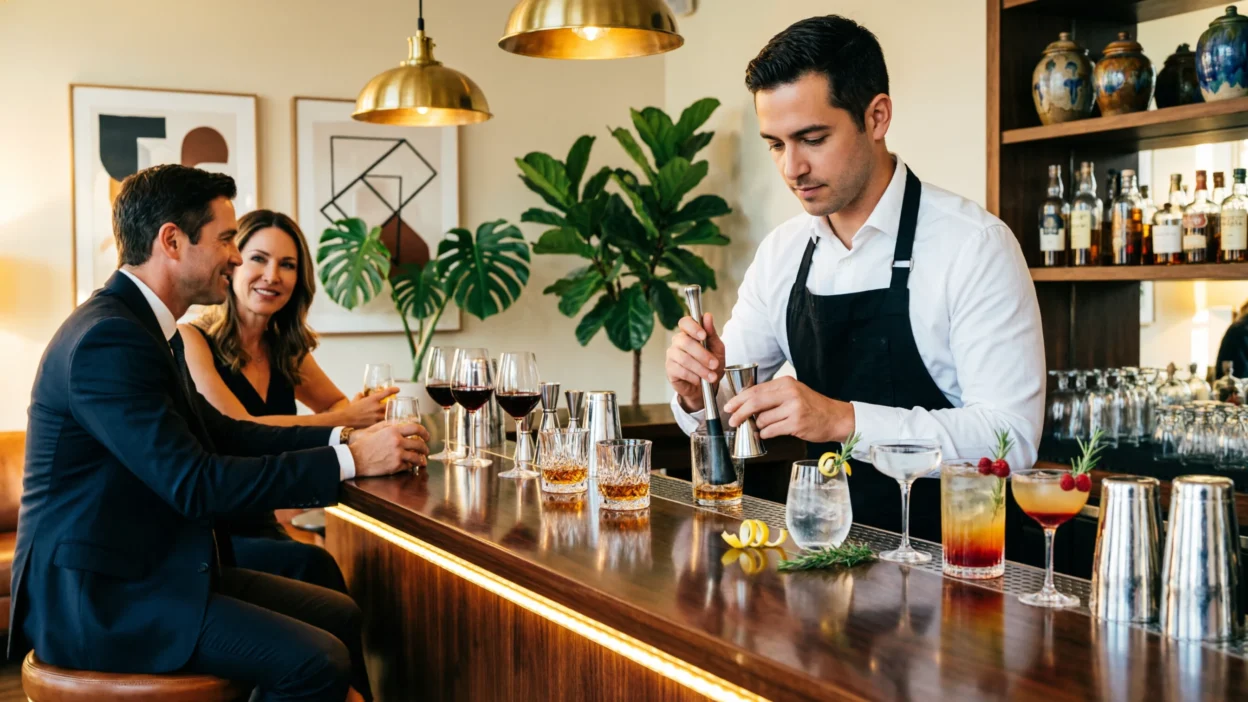
Walking into a bar is not just about ordering a drink. It is about awareness, respect, and smooth social behavior.
Bar etiquette helps create a comfortable atmosphere where everyone can relax, socialize, and enjoy themselves without tension. Because bars are shared social spaces, individual behavior quickly affects the mood of the entire room.
Moreover, bars bring together strangers, friends, staff, and different personalities. Therefore, understanding bar etiquette prevents misunderstandings, awkward moments, and unnecessary conflict. When followed naturally, etiquette makes you appear confident, considerate, and socially intelligent.
Rather than rigid rules, bar etiquette offers practical guidance. This article explains how to behave respectfully at bars, interact with bartenders, manage drinks responsibly, and stay socially aware. With real examples, dos and don’ts, and clear tips, you will feel comfortable in any bar setting.
What Is Bar Etiquette?
Bar etiquette refers to the unwritten social rules that guide polite and respectful behavior in bars and lounges.
Why Bar Etiquette Matters
- Bars are shared social environments
- Staff work under pressure
- Alcohol lowers social boundaries
- Courtesy keeps interactions smooth
Because alcohol is involved, etiquette becomes even more important.
Entering a Bar the Right Way
First impressions matter in social spaces.
Be Aware of the Environment
When you enter:
- Take a moment to observe
- Notice seating availability
- Respect personal space
Rushing inside disrupts the flow. Calm awareness reflects good bar etiquette.
Greet Staff Politely
A simple greeting goes a long way.
Acknowledging bartenders and servers builds respect and improves service quality.
Ordering Drinks Politely
How you order matters more than what you order.
Wait Your Turn
Bars can be busy.
Avoid waving money, snapping fingers, or shouting. Patience is a core part of bar etiquette.
Order Clearly and Confidently
- Know what you want
- Speak calmly
- Avoid complicated requests during rush hours
Clear communication helps bartenders serve efficiently.
Interacting With Bartenders
Bartenders manage multiple customers at once.
Show Respect at All Times
- Say “please” and “thank you”
- Avoid complaining loudly
- Trust their expertise
Respectful behavior often leads to better service.
Tipping Etiquette
Tipping expectations vary, yet appreciation matters.
When tipping is customary, do so politely and discreetly. Generosity should never be performative.
Drinking Responsibly in Social Settings
Responsible drinking is central to bar etiquette.
Pace Yourself
- Sip slowly
- Alternate with water
- Know your limits
Overdrinking creates discomfort for everyone around you.
Avoid Pressuring Others
Never push someone to drink.
Respecting personal choices shows maturity and social awareness.
Conversation and Social Awareness
Bars encourage interaction, yet boundaries matter.
Reading Social Cues
Pay attention to body language.
If someone seems uncomfortable or disengaged, step back gracefully. Awareness is key to respectful bar etiquette.
Volume Control
- Speak at a moderate volume
- Avoid shouting across the bar
- Keep laughter controlled
A pleasant atmosphere depends on balanced noise levels.
Using Phones and Devices at Bars
Technology affects social flow.
Phone Etiquette
- Avoid excessive scrolling
- Do not play loud videos
- Stay present with company
Being engaged shows respect to those around you.
Seating, Standing, and Space Awareness
Shared space requires courtesy.
Respect Seating Arrangements
- Do not take empty seats without asking
- Avoid spreading belongings
- Share tables when appropriate
Space awareness keeps bars functional and welcoming.
Bar Hygiene and Cleanliness
Clean behavior matters even in casual settings.
Keep Your Area Tidy
- Dispose of napkins properly
- Avoid spilling drinks
- Use coasters when provided
Clean habits support staff and reflect strong bar etiquette.
Paying and Closing Your Tab
Ending interactions properly leaves a positive impression.
Closing Out Smoothly
- Pay promptly
- Check your bill calmly
- Thank the staff
Avoid arguing over small charges publicly.
Common Bar Etiquette Mistakes
Knowing mistakes helps you avoid them.
Frequent Errors
- Interrupting bartenders
- Overdrinking
- Invading personal space
- Ignoring staff instructions
Avoiding these mistakes keeps bar etiquette intact.
Bar Etiquette Dos and Don’ts
| Do | Don’t |
|---|---|
| Wait patiently | Shout or snap |
| Tip respectfully | Demand attention |
| Drink responsibly | Pressure others |
| Respect space | Crowd strangers |
Real-Life Bar Etiquette Examples
Example: Busy Friday Night
You wait patiently, order clearly, and thank the bartender. Service remains smooth.
Example: Social Interaction
You notice someone seems uncomfortable, so you politely step back without offense.
Example: Closing Time
You close your tab calmly and thank staff, leaving a positive impression.
These moments reflect proper bar etiquette in real settings.
Why Bar Etiquette Improves Social Experiences
Good etiquette benefits everyone.
Long-Term Benefits
- Better social connections
- Positive reputation
- Comfortable interactions
- Safer environments
Because bars thrive on shared enjoyment, etiquette strengthens the experience.
Final Thoughts on Bar Etiquette
Bar etiquette is about balance, respect, and self awareness. By ordering politely, drinking responsibly, respecting boundaries, and acknowledging staff, you contribute to a welcoming atmosphere. These behaviors help bars remain enjoyable spaces rather than stressful ones.
Moreover, consistent etiquette builds confidence. When you know how to act, social situations feel natural instead of forced.
Ultimately, practicing bar etiquette allows you to enjoy nightlife while ensuring everyone around you feels comfortable and respected.
FAQ,s
What is the most important rule of bar etiquette?
Respecting staff, space, and other guests is the most important rule.
Is it rude to wave at a bartender?
Yes, patience is preferred over waving or snapping.
How much should you tip at a bar?
Tipping depends on location, but polite appreciation is always encouraged.
Is it okay to talk to strangers at a bar?
Yes, as long as you respect boundaries and read social cues.
Should you use your phone often at a bar?
Minimal phone use is best to stay socially engaged.
What should you do if you drink too much?
Stop drinking, hydrate, and behave calmly to avoid disturbing others.

Theo Blackmere is an American writer focused on etiquette and professional communication. He contributes insightful, well structured content to Etiquify. His writing emphasizes respect, clarity, and modern social awareness across personal and professional interactions.