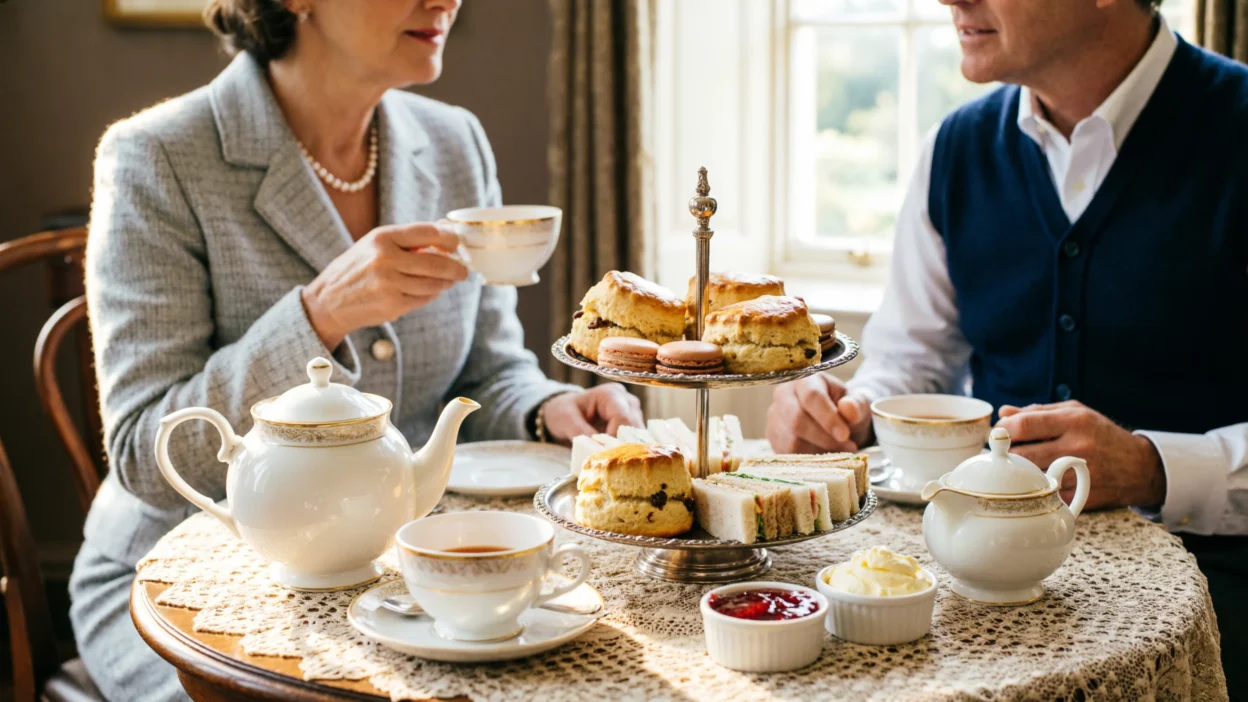
Afternoon tea etiquette reflects elegance, tradition, and refined social conduct.
Originating in 19th century United Kingdom, the ritual became fashionable through Anna Russell, Duchess of Bedford.
Today, whether you enjoy tea at home or in iconic venues like The Ritz London, proper etiquette enhances the experience.
Because afternoon tea is as much about presentation as taste, small details matter greatly.
Dress Appropriately
Appearance sets the tone.
Choose Smart Attire
Opt for elegant yet comfortable clothing. Many traditional tea rooms prefer smart casual or semi-formal dress.
Avoid Overly Casual Wear
Athletic clothing, flip-flops, or distressed outfits may feel out of place.
Seating And Napkin Etiquette
Posture communicates refinement.
Place Napkin On Lap
Once seated, unfold your napkin and rest it neatly on your lap.
Leave It On Chair Briefly
If stepping away, place the napkin on your chair rather than the table.
Handling The Teacup
Graceful movements elevate the ritual.
Hold The Cup Properly
Grip the handle gently with thumb and index finger, supporting with the middle finger.
Avoid Raising Your Pinky
Despite popular myth, extending the little finger is considered improper.
Stir Quietly
Stir tea gently back and forth without clinking the spoon against the cup.
Adding Milk And Sugar
Timing matters.
Add Milk After Tea
In formal settings, tea is usually poured first, then milk if desired.
Do Not Overfill
Leave space at the top to prevent spills.
Eating Scones Correctly
Scones are a centerpiece of afternoon tea.
Break, Don’t Bite
Split the scone gently with your hands rather than cutting it like bread.
Apply Cream And Jam Properly
In some regions like Cornwall, jam goes first, then cream. However, in Devon, cream comes first. Follow the host’s preference when unsure.
Sandwich And Pastry Order
There is a traditional sequence.
Start With Savory
Begin with finger sandwiches before moving to scones.
Finish With Sweets
Conclude with pastries and cakes.
Conversation Etiquette
Tea is a social occasion.
Keep Topics Light
Avoid controversial or overly personal discussions.
Engage Politely
Listen actively and contribute thoughtfully.
Common Afternoon Tea Mistakes
Avoid these frequent errors:
- Dunking biscuits in tea
- Speaking loudly across the table
- Applying toppings to the whole scone at once
- Slouching in your seat
- Using your phone excessively
Small adjustments create a polished impression.
Why Afternoon Tea Etiquette Matters
Afternoon tea represents tradition, hospitality, and elegance. Because it combines culinary enjoyment with social refinement, observing proper etiquette preserves its charm. Furthermore, respectful behavior shows appreciation for history and cultural heritage. When guests follow established customs, the experience feels timeless and sophisticated.
Final Thoughts On Afternoon Tea Etiquette
Afternoon tea etiquette blends grace, patience, and thoughtful presentation. By dressing appropriately, handling teacups delicately, and following traditional food order, you honor a centuries old custom.
Additionally, engaging in light, pleasant conversation enriches the gathering. Since afternoon tea celebrates elegance and connection, mindful conduct elevates the entire occasion.
Ultimately, refined manners transform a simple cup of tea into a memorable and distinguished social experience.
FAQ,s
Who started afternoon tea?
It became popular through Anna Russell, Duchess of Bedford.
Should I put milk before tea?
Traditionally, tea is poured first in formal settings.
Do I cut scones with a knife?
No, break them gently by hand.
Is it okay to dunk biscuits?
No, dunking is considered impolite.
What do I eat first?
Start with savory sandwiches before sweets.
Can I use my phone during tea?
Avoid phone use to maintain elegance.
Evan Whitmore is an American writer focused on modern etiquette and communication. He contributes practical, reader friendly content to Etiquify. His work emphasizes respect, clarity, and confidence in everyday personal and professional interactions.